
How to Train for a Sparring Match: A Safe, Practical Plan
Prepare for boxing sparring with coached technical rounds, controlled conditioning, clear intensity rules and a simple final-week plan.
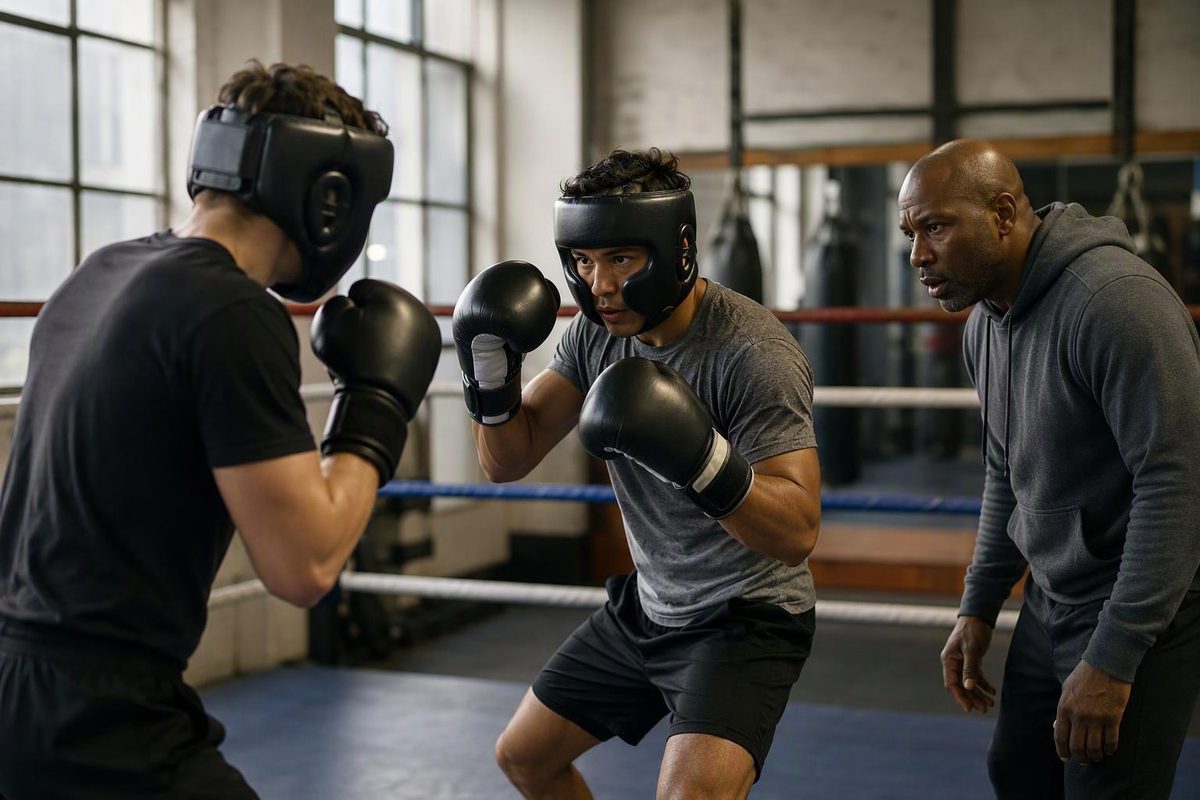
Train for a sparring match by improving the skills you can keep under pressure—not by trying to win every gym round. Preparation should combine supervised technical sparring, defense, ring movement and round-length conditioning while leaving you fresh enough to make good decisions.
Sparring is contact training and belongs under a boxing coach’s supervision. England Boxing’s coaching handbook treats technical and conditioned sparring as learning experiences, calls for partners to be matched by factors including experience, ability, weight and height, and says sparring should stop when fatigue sets in. Its exact coaching and equipment rules apply within its jurisdiction, so follow your gym and governing body wherever you train (England Boxing coaching handbook).
Define the session first
Ask your coach to confirm:
- Format: technical, conditioned or open sparring
- Rounds: number, duration and rest period
- Intensity: light, moderate or harder contact
- Partner: compatible size, experience, ability and temperament
- Restrictions: jab only, body shots only, one boxer attacking or another theme
- Equipment: wraps, suitable sparring gloves, mouthguard and any headguard or protector required by the gym or governing body
“Light” is too vague unless both boxers and the supervising coach understand it the same way. Either boxer should be able to ask for less pace or contact. End the round if the agreed level is not respected.
If by “sparring match” you mean a sanctioned competitive bout, this is not a substitute for a bout camp. Eligibility, medical clearance, matching, weigh-in rules and equipment depend on the governing body. See how long to train before a boxing match, then let your coach assess your readiness.
Build the skills in the order you will use them
1. Keep your stance while moving
Step forward, back and sideways without bringing your feet together or crossing them. Move the foot nearest the direction of travel first, then recover your normal stance width.
Common fault: reaching until your head and chest drift beyond the lead knee.
Corrective drill: put tape lines on the floor and shadowbox around them. Throw one or two straight punches, return your hands and take one balanced step. Freeze after each sequence. The checkpoint is whether you could immediately move in any direction without repairing your stance first.
2. Build around a reliable jab
Use the jab to establish range, interrupt an advancing partner and create time to move. Practise single and double jabs plus the jab–rear hand, recovering your stance and guard each time. For a mechanics refresher, use the jab built from stance up.
Common fault: watching the jab land and leaving the lead hand extended.
Corrective drill: complete controlled bag rounds in which every jab must return to your cheek before you step or punch again. Have a coach call “check” at random; freeze and inspect your hand position and balance.
3. Attach a defense to every attack
Beginners often finish punching and remain directly in front of the partner. Give each attack an exit instead:
- Jab, then step out of range
- One-two, then catch or parry the returning jab
- Jab–rear hand, then pivot away
- Body jab, then restore your level and guard before moving
Begin with cooperative partner drills. One boxer throws a known punch or combination while the other defends and exits. Increase the number of choices before increasing contact—for example, let the attacker choose between a jab and a one-two while the defender reads the first punch.
4. Progress from conditioned to open rounds
Conditioned sparring limits the task so you can recognise and correct mistakes. A useful progression is:
- Jab-only rounds: work on range, feints and exits.
- Lead hand versus full defense: one boxer attacks with the lead hand while the other defends and moves.
- One-for-one exchanges: one controlled combination each, then reset.
- Theme rounds: one boxer pressures while the other works away from the ropes or corners.
- Open technical sparring: both boxers use their full skills at an agreed pace.
Move forward only when you can stay balanced, see punches coming and follow the restriction. More power will not correct poor positioning.
Condition for rounds without adding head contact
Match bag, pad or shadowboxing intervals to the planned round and rest times. Let your coach set the total workload for your experience and current fitness.
Give each round a purpose:
- Round 1: establish distance with the jab and feet
- Round 2: add straight combinations and an exit
- Round 3: defend, answer with one clean combination and reset
- Later rounds: preserve the same posture and decisions as fatigue rises
Do not turn every conditioning round into nonstop punching. Sparring includes observation, feints, movement, attacks and recovery. Reproduce that rhythm on the bag: move, set your feet, punch cleanly, simulate a defense and reposition.
Use running, skipping or other conditioning to support boxing practice, not to exhaust yourself before contact. England Boxing recommends sparring near the start of a session after a proper warm-up and says not to spar when fatigued or dehydrated (coaching handbook).
A simple final week
This is a final-week template for a boxer who already has a technical base and has progressed through supervised partner drills. It is not a plan for learning to spar in seven days.
- Day 1 — Technique: stance, jab, defense and controlled bag work
- Day 2 — Conditioning: round-length intervals plus relaxed shadowboxing
- Day 3 — Partner skills: cooperative defense drills and conditioned sparring
- Day 4 — Recovery: rest, walking, mobility or easy shadowboxing
- Day 5 — Pads or bag: rehearse the tactical plan at a controlled pace
- Day 6 — Easy technical work: short, sharp practice without exhausting rounds
- Day 7 — Sparring: arrive rested, hydrated and properly equipped
Your coach may change the order or remove the midweek contact according to your training history. Do not add hard sparring simply because the date is approaching. The final sessions are for sharpening timing and confirming the plan, not proving fitness.
Use a three-point plan in the ring
Keep your instructions short enough to remember:
- Opening phase: establish the jab and measure distance.
- After punching: defend or change position rather than staying square in front.
- When crowded: protect yourself, recover your stance and listen to the coach instead of throwing wildly.
Between rounds, settle your breathing and listen for one correction. A long list is difficult to apply when tired.
Know when not to spar
Do not spar while ill, injured, dehydrated, medically suspended or unable to defend yourself reliably. After contact, immediately report symptoms such as headache, nausea, dizziness, balance trouble, visual problems, confusion, unusual sluggishness or difficulty concentrating. The Association of Ringside Physicians lists these among possible concussion signs and symptoms and recommends stricter concussion management in combat sports because head contact is an objective of the sport (ARP consensus statement).
If concussion is suspected, stop contact and obtain assessment from an appropriate healthcare professional. Do not use another round to test whether the symptoms have passed. Wear any headguard required by your gym or rules, but do not treat it as permission to absorb unnecessary punches.
The useful checkpoint is not whether you dominated your partner. Ask whether you maintained your stance, saw the work, defended after punching and followed the agreed task from the first round to the last.