
Boxing's Most Important Punch Is Also Its Most Miscoached
The jab taught from stance up: the mechanics, the four faults every beginner shows, and the mirror and bag drills that build a jab worth respecting.
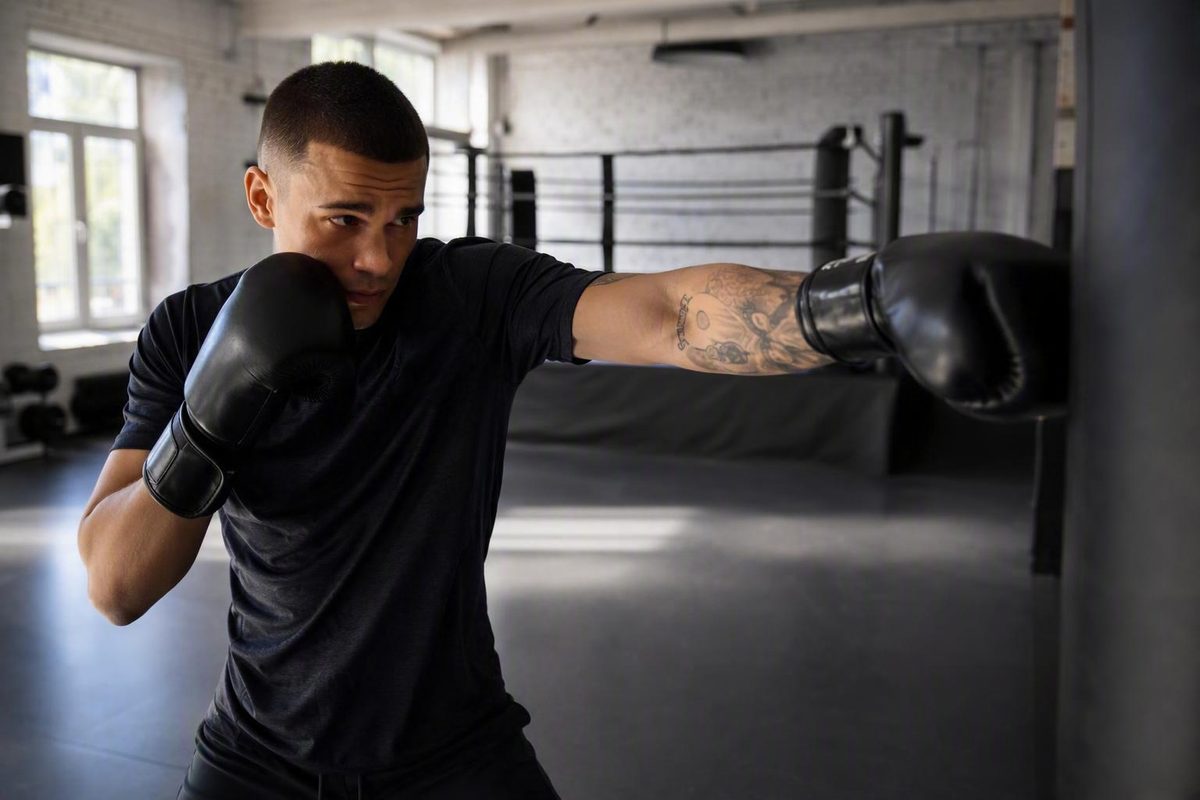
Every boxing curriculum starts with the jab, and most beginners still learn it wrong — because the jab’s power source is invisible. It looks like an arm punch. It is a whole-body punch that happens to travel down the arm. Build it in this order.
Stance first: the jab lives in your feet
Orthodox stance: left foot forward, feet past shoulder width, rear heel slightly raised, weight balanced so you could step any direction instantly. Hands at cheekbone height, elbows in, chin down. If any of that collapses when you punch, the jab collapses with it — a jab thrown from a compromised stance is a scouting report on everything else you do.
The mechanics, in one motion
From the guard, the lead hand travels straight to the target — shortest path, no wind-up, no drop. Three things happen together: the fist rotates palm-down arriving at impact, the lead shoulder rises to cover your chin, and a small push from the rear foot slides you forward an inch or two. Then the hand returns on the same line, just as fast, to the same guard position. The return is not optional decoration; counters live in the gap where lazy jabs come home low and slow.
The four beginner faults
- The telegraph — pulling the fist back before launch. Fix in the mirror: any backward twitch restarts the set.
- The dropped return — hand comes back at chest height. Fix on the bag: touch your cheekbone after every jab, audibly.
- The arm-only jab — no rear-foot push, no shoulder. It scores nothing and stops nobody. Fix: jab-step drills where the foot and fist land together.
- The reach — leaning forward at the waist for distance. Fix: jab at a target one inch beyond range and step to it; leaning is borrowed distance you repay with your chin.
The drills that build it
Three rounds in front of a mirror watching for the four faults; three on the heavy bag for snap — the bag should pop, not thud; and doubles and triples to break the one-jab habit. Ten minutes a day for a month produces a jab most hobbyists never develop.
Every other punch you learn will be set up, measured, or disguised by this one. The gyms that drill the jab for months before the cross aren’t being stingy — they’re teaching the punch the whole sport is built on.