
A 25-Minute Cardio Boxing Workout That Keeps Technique First
Try a beginner cardio boxing workout with six shadow-boxing rounds, a moderate pace, clear technique checks and an easier starting option.
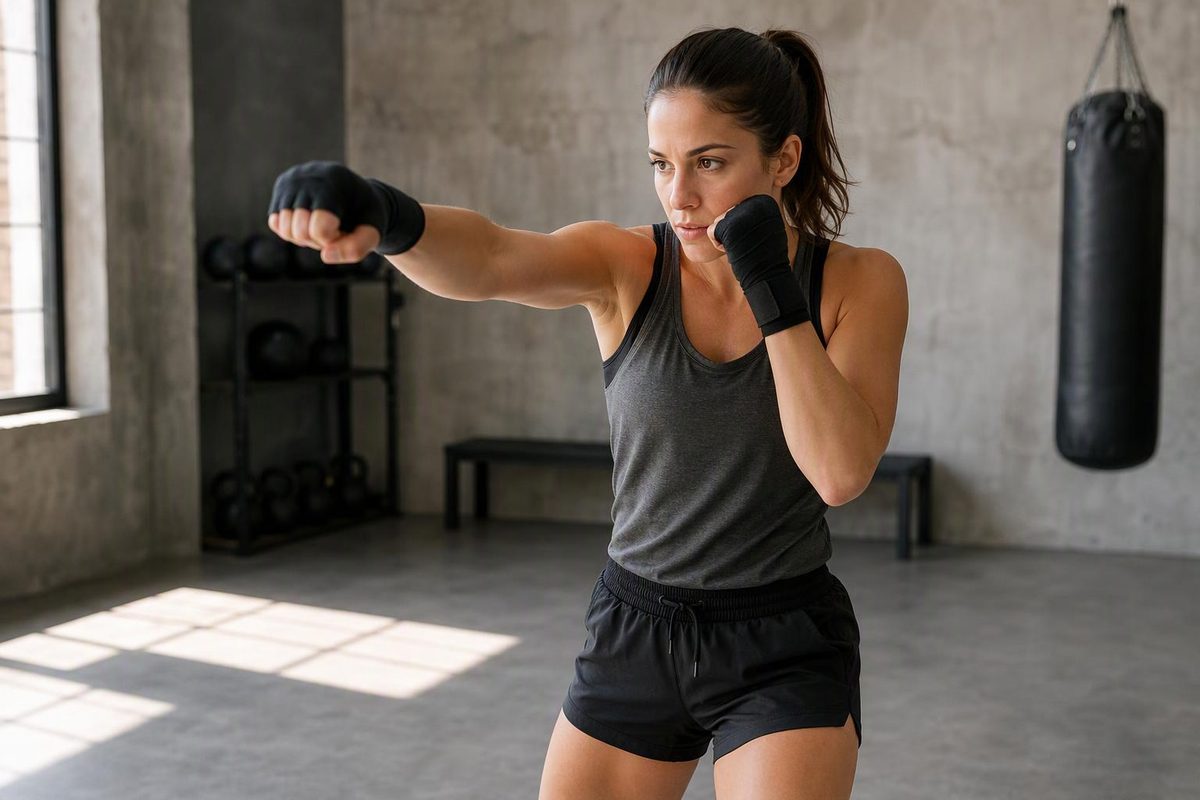
This cardio boxing workout uses simple punches and footwork to keep you moving at a manageable pace. You need a timer and clear floor space—not a bag, gloves or a partner. You will be shadow boxing: practising punches and movement without striking a target.
The aim is steady activity with balanced movement, rather than maximum punch speed. It is a non-contact fitness session with boxing practice built in; it does not replace coaching or prepare you for sparring on its own.
Set up and choose your pace
Clear enough space to extend your arms and take short steps in each direction without hitting furniture. Use a stable, non-slip surface. England Boxing makes adequate, non-slip floor space a condition of its at-home shadow-boxing drills.
Start with one foot forward: left for orthodox, right for southpaw. Keep width and length between your feet, knees softly bent, chin slightly tucked and hands near your cheeks. Your lead hand is on the same side as your forward foot; your rear hand is the other hand.
Use these two punches:
- Jab: send the lead hand straight toward an imaginary target, then return it to guard.
- Cross: send the rear hand straight, turning through the ball of the rear foot with your hip and shoulder, then recover your stance.
Keep the other hand at your face, your wrist straight and your shoulders relaxed. Breathe out as you punch. These cues follow the stance, guard and punching fundamentals in England Boxing’s coaching handbook. Extend under control rather than snapping the elbow into a hard lock. If these movements are unfamiliar, review how to throw a punch before using the timer.
Aim for moderate effort: breathing harder, but still able to talk. The CDC’s talk test describes moderate activity as a pace at which you can talk but not sing. If you can manage only a few words before needing a breath, slow down. Shadow boxing is not automatically moderate—it depends on how you perform it.
Do not train through pain or dizziness. If a health condition or injury makes exercise suitability uncertain, get individual medical advice before starting.
The 25-minute workout
This is a suggested beginner session, not a competition-round prescription:
- 5 minutes: warm-up
- 15 minutes: six rounds of 2 minutes, each followed by 30 seconds of easy recovery—including after the final round
- 5 minutes: cool-down
Warm up: 5 minutes
- First 2 minutes: walk or march, gradually increasing the pace. Let your arms swing naturally.
- Next minute: use gentle shoulder circles, comfortable trunk turns and small knee bends. Nothing should feel forced.
- Final 2 minutes: take short steps in stance, then add occasional slow jabs and crosses.
For each step, move the foot nearest the direction of travel first, then let the other follow. Keep your feet apart rather than crossing them or bringing them together.
The American Heart Association recommends 5–10 minutes of warming up, with longer preparation for more intense activity. Extend this warm-up if you are not ready to move comfortably.
Main work: six controlled rounds
During each 30-second recovery, walk slowly, relax your arms and check your breathing. Resume only when you can move with control; extend the break if needed.
| Round | Action for 2 minutes | Checkpoint |
|---|---|---|
| 1. Footwork | Take one short step forward, then back. Add short steps left and right. Keep your guard up. | Your feet stay apart and never cross. |
| 2. Single jab | Throw one jab, recover the hand, then take a small repositioning step. Repeat without rushing. | The rear hand stays beside your face. |
| 3. Jab–cross | Throw a jab and cross, recover both hands, then reset before repeating. | You finish balanced rather than leaning forward. |
| 4. Punch and exit | Throw a jab–cross, return to guard, then step back: rear foot first, lead foot following. | The step preserves the width and length of your stance. |
| 5. Jab and reposition | Throw a jab, bring it home, then move a short distance left or right. Change direction between repetitions. | Move the foot nearest the direction of travel first; do not cross your feet. |
| 6. Put it together | Alternate single jabs and jab–crosses. Follow each sequence with a short step back or sideways. | You can stop at any moment without stumbling or taking a rescue step. |
Keep moving between sequences, but do not turn the round into constant punching. England Boxing’s coaching handbook emphasizes maintaining the base during footwork, recovering the guard and keeping beginner combinations simple. Two clean punches are enough here.
Cool down: 5 minutes
Walk slowly, easing the pace as your breathing settles. Let your hands drop and shoulders relax. The American Heart Association recommends gradually reducing walking speed for 5–10 minutes rather than stopping abruptly.
Fix one common fault: losing your stance
If your feet creep together as you tire, stop punching and use a step-and-freeze drill:
- Set your stance.
- Take one small step, letting the second foot follow without meeting the first.
- Freeze and check that your feet still have width and length between them and your weight feels supported.
- Repeat forward, backward and sideways at an easy pace.
Use this drill for the remainder of the round if necessary. Review the beginner footwork guide if balance remains difficult. Increasing punch speed will not fix a shrinking stance.
Make it easier—or progress gradually
For a first attempt, use 1-minute rounds with the same 30-second recoveries. Including the warm-up and cool-down, that makes a 19-minute session. You can also replace any punching round with easy footwork or walking.
Repeat the same version until your final round is as controlled as your first. Then lengthen the shorter rounds toward 2 minutes before increasing pace. Change one variable at a time; keep the talk test and balance checks in place.
If you later want deliberate harder efforts separated by recovery, use the HIIT boxing workout. For this session, stay with a repeatable rhythm—not a finishing sprint.