
How to Throw a Punch: Stance, Straight Punches and Guard Recovery
Learn how to throw a boxing punch from a balanced stance, form your fist, practise the jab and cross, and correct common faults with simple solo drills.
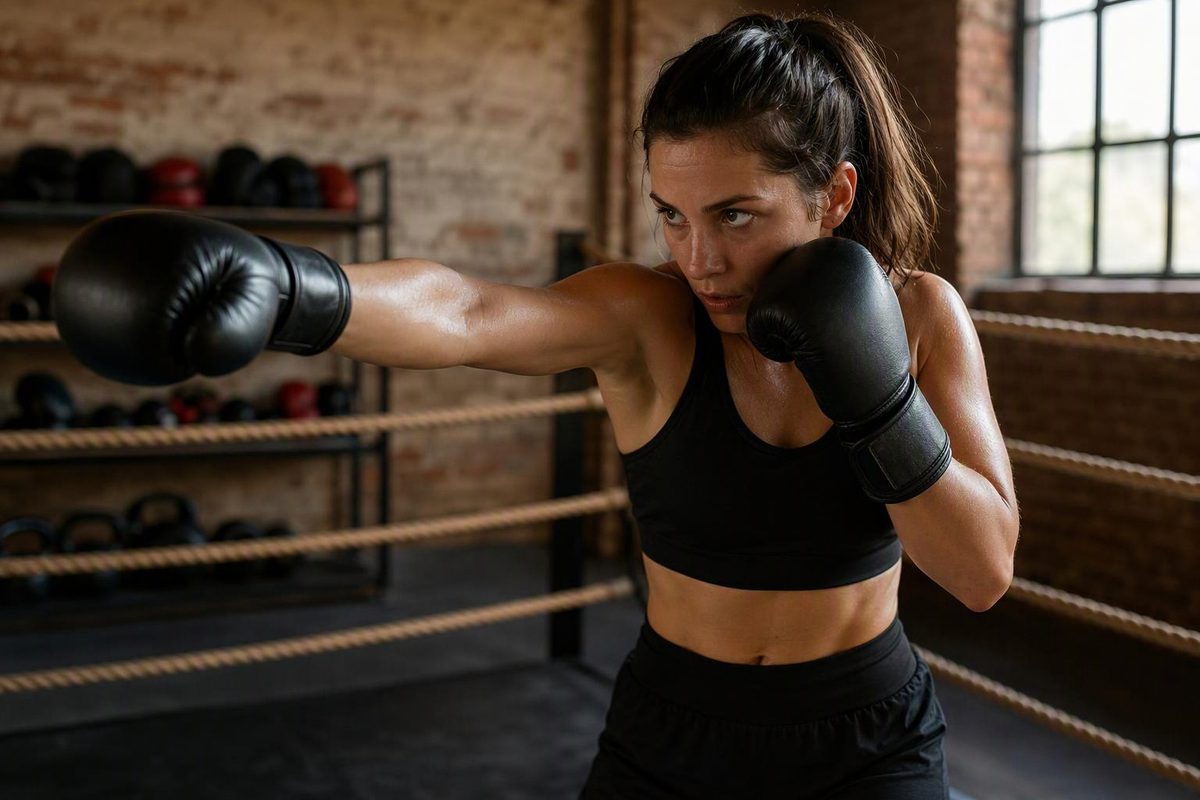
To throw a straight boxing punch, start balanced, keep your wrist straight, coordinate your body turn with the arm, and bring the hand straight back to guard. Begin with the jab—the straight punch from your lead hand—then learn the rear straight, commonly called the cross. Practise control before speed or power.
Start without a target. For bag or pad work, use properly fitted hand wraps and suitable boxing gloves in good condition. England Boxing’s coaching handbook stresses both hand wrapping and adequate glove padding for hitting equipment. Keep punches at people out of solo practice; partner contact belongs in coached sessions.
1. Set your stance and guard
In an orthodox stance, your left foot and left hand lead. In a southpaw stance, your right foot and right hand lead. The instructions below work for either: “lead” means the front side, “rear” the back side.
- Set your feet roughly shoulder-width apart or slightly wider, with one foot forward and the other back. Do not stand on a single tightrope line.
- Soften your knees and keep your rear heel lightly raised.
- Turn partly sideways rather than facing the target square-on.
- Bring your hands near your cheeks, with the lead hand slightly forward and elbows close to your body.
- Lower your chin slightly, keep your eyes forward and relax your shoulders.
These follow England Boxing’s stance and guard principles: maintain a usable base, stay relaxed and keep the non-punching hand in guard.
Checkpoint: Can you take a short step forward or backward without first rearranging your feet? If not, review your boxing footwork before adding punches.
2. Make a fist and align your wrist
Curl your fingers into your palm, then fold your thumb across the outside of the curled fingers. Do not trap it inside the fist or leave it sticking out. Keep your wrist in line with your forearm rather than bent upward, downward or sideways. This fist setup is described in instruction featuring striking coach Jordan Ly.
Keep your hand closed without squeezing hard throughout the whole movement. Firm the fist near the imagined point of contact, then relax as you reset. England Boxing’s handbook pairs a relaxed punching arm with a straight wrist and an exhale as the punch is thrown.
Checkpoint: Slowly extend one hand and look at it from the side. Your fist and forearm should form a continuous line, with no kink at the wrist.
3. Throw the jab
- Start from guard. Do not pull the lead hand backward or drop it before punching.
- Coordinate the leg, body and arm. A gentle push against the floor from your lead foot starts a small hip-and-shoulder turn as the lead fist travels straight forward. Let the elbow follow behind the fist rather than lifting sideways first.
- Keep your base. Let the lead shoulder come forward without throwing your weight beyond your supporting feet. Keep your chin down and rear hand beside your cheek.
- Turn the fist palm-down near the end. Extend under control; do not force the elbow past straight. Exhale briefly.
- Return along the same path. Bring the hand back to guard while the rear hand stays in place.
My Boxing Coach’s jab guide emphasises the lead-foot drive, straight elbow path, late fist rotation and direct return. It also warns against chasing power by tipping weight onto the front leg.
Checkpoint: After each jab, you should still be able to step back without stumbling. For a fuller breakdown, see the jab built from stance up.
4. Add the rear straight
Start from the same guard. Turn on the ball of your rear foot, letting the rear hip and shoulder rotate forward together as your rear fist travels straight toward the target. Keep the lead hand guarding your face.
Turn the punching fist palm-down near the end, exhale, then return it to guard and reset your stance. Keep the turn controlled: do not spin beyond the target, lift the rear foot clear of the floor or lean forward to manufacture reach. These are key faults identified in England Boxing’s rear-straight coaching guidance.
Checkpoint: Your rear heel can turn, but your feet should still support you. Finish ready to move, not twisted and stuck.
A short solo practice—and what to fix
Try this slow sequence in clear space. If using a mirror, stay beyond punching distance from it:
- Five jabs: pause in guard after each one.
- Five rear straights: watch the rear-foot turn and wrist alignment.
- Five jab–cross sequences: return each hand directly to guard.
Rest, then repeat only while the movements remain controlled. Use these fault–drill pairs to guide the next set:
| Fault | Corrective drill |
|---|---|
| Elbow lifts sideways before a straight punch | Perform five slow mirror repetitions, watching the elbow follow the fist. |
| Free hand drops | Throw one punch at a time while checking that the opposite hand stays beside your cheek. |
| You reach or fall forward | Shorten the imagined target distance; punch, reset, then take one small step back. |
| Hand hangs out after punching | Practise “out–back–pause,” completing the return before the next repetition. |
Once the solo movement is repeatable, ask a coach to check it before increasing bag intensity. Begin with light single punches, resetting between them. Stop if your hand, wrist or elbow hurts rather than trying to punch through it.