
Build Boxing Cardio Without Losing Your Technique
Try a 22-minute beginner boxing cardio workout with steady shadow-boxing rounds, clear technique checks and a gradual progression.
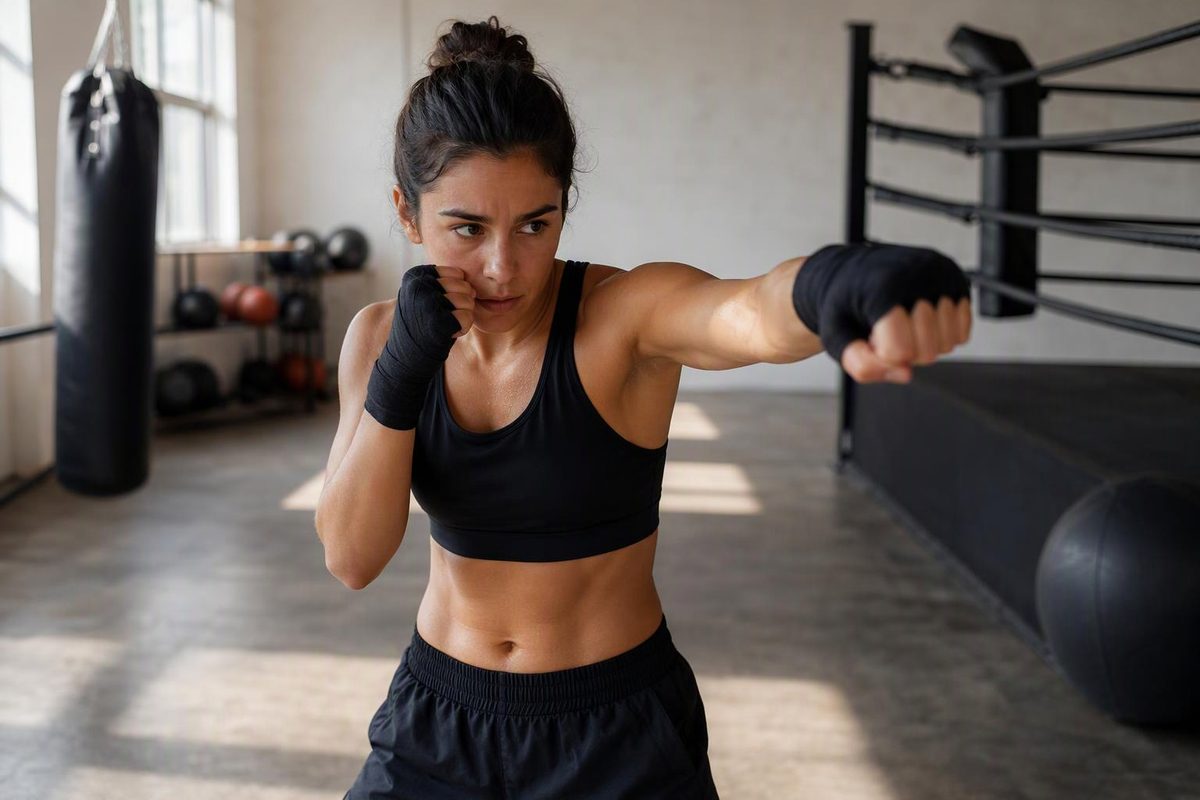
Boxing cardio does not have to mean punching as fast as possible. Start with steady rounds of footwork, simple punches and guard recovery, at a pace you can maintain without losing balance. You can do the session below without a bag, gloves or a partner.
The aim is to finish each round still boxing—not standing still and swinging tired arms. England Boxing’s coaching handbook identifies shadow boxing as a way to practise skills and develop fitness, and recommends short rounds for beginners because technique can decline as rounds get longer. England Boxing coaching handbook
Set the effort before the timer
For this workout, aim for moderate effort, rather than all-out intervals. Your breathing should increase, but you should still be able to talk. The CDC’s practical guide describes moderate intensity as about 5–6 out of 10, where 0 is sitting and 10 is maximal effort: you can talk, but not sing. If you can only manage a few words before taking a breath, you are working at vigorous intensity. CDC intensity guide
Use that as a pace check, not a target to force. If the movements are unfamiliar, practise them slowly first. Fitness work should not become your first attempt at learning a punch.
Set up with:
- A timer and clear, non-slip floor space, with room to step and extend your arms.
- Suitable footwear and water nearby.
- A staggered stance, soft knees and hands near your cheeks.
- An imaginary opponent in front of you, so your punches and movement have a purpose.
If you have a chronic health condition, ask your clinician what activity is appropriate. If you have been inactive, check with them before starting vigorous exercise. CDC advice on adding activity
A 22-minute boxing cardio session
This is a suggested beginner practice structure, not a tested conditioning protocol or a competition-round requirement. Start with one-minute rounds if two minutes is too much; that makes the session 17 minutes with the same warm-up, recovery and cool-down. Allow more time if you need longer preparation or recovery.
1. Warm up — 4 minutes
Begin with easy marching or walking. Add gentle shoulder movements, then short forward, backward and sideways steps in your boxing stance. Finish with slow jabs and jab–cross combinations.
A jab is your lead-hand straight punch; a cross is your rear-hand straight punch. Rehearse them without rushing, bringing each hand back to guard. If your feet keep coming together, review the beginner footwork guide before adding pace.
2. Box — five 2-minute rounds
Take one minute of recovery between rounds, giving you four recovery periods. Walk gently or stand comfortably; take longer if you are not ready to restart.
| Round | Action | Checkpoint |
|---|---|---|
| 1: Footwork | Take short steps forward, backward and sideways. Keep punches out of this round. | Your feet do not cross or meet, and you can stop in balance. |
| 2: Jab and reset | Throw one jab, return it to guard, then take a small step to reposition. | Your rear hand stays near your cheek; you do not reach with your head. |
| 3: Jab–cross | Throw two straight punches, recover your guard, then move before repeating. | The second punch does not pull you over your front foot. |
| 4: Punch and exit | Alternate a single jab with a jab–cross. Follow each sequence with a short step back. | You finish in a usable stance, not with your feet together. |
| 5: Controlled repeat | Use the cleanest pattern from rounds 2–4 and maintain a comfortable rhythm. | Your last sequence looks like your first. |
For each step, move the foot nearest the direction of travel first, then let the other follow without narrowing your stance. For the cross, turn through the ball of your rear foot and your hip rather than leaning forward.
Keep the steps small and the shoulders relaxed. Breathe out briefly as you punch, and breathe normally between sequences. England Boxing’s technical guidance emphasises a balanced base, guard recovery, short footwork with minimal bounce and breathing out during punches. Coaching principles
Do not fill every second with punches. Repositioning and resetting are part of the round. Reduce your pace if your guard drops, your feet tangle or your punches become uncontrolled. Stop for pain, dizziness or feeling unwell rather than trying to finish the timer.
3. Cool down — 4 minutes
Walk slowly and let your breathing settle; continue longer if needed. Note which round first became untidy—that is the one to simplify next time.
One common fault: rushing until the feet stop
A beginner may chase faster hands while becoming rooted to the floor.
Corrective drill: jab, return to guard, take one small step, then pause. Check that your feet remain separated and you could move in another direction. Repeat slowly for one minute before your next cardio session. Add pace only while that checkpoint stays intact.
For a fuller introduction to purposeful solo practice, see what shadow boxing is and how to use it.
Progress duration before intensity
Try the session twice a week initially, with a day between sessions, and adjust around your boxing classes and recovery. After several comfortable sessions, change just one thing:
- Build one-minute rounds toward two minutes.
- If all five two-minute rounds stay clean, add one more round.
- Keep the recovery periods while increasing total work.
Use brisk walking or cycling on other days if you want more aerobic activity without adding more punches. For general adult health, the CDC recommends 150 minutes of moderate activity—or 75 minutes of vigorous activity—weekly, plus two days of muscle-strengthening work. Count only the minutes that reach moderate or vigorous effort toward that aerobic target, not automatically all 22 minutes. This session is not a complete weekly fitness plan. CDC adult activity guidance
A heavy bag is optional, not a progression requirement. If you use one, get instruction on punching and wrapping, wear suitable bag gloves, and keep the contact controlled. England Boxing advises basic punching coaching before novices use a bag and appropriate wraps and gloves for striking. Bag-work and hand-protection guidance
Do not use sparring as a cardio substitute: contact training needs a qualified coach and appropriate safeguards. For a separate session built around harder efforts and recovery, see the beginner HIIT boxing workout, intended for readers who already exercise regularly and can maintain a balanced jab and cross.