
Choose Gloves That Fit Your Hands and Your Training
Match the ounce range to the session, measure your hand, test fit over your usual wraps, and confirm coach, gym or competition requirements.
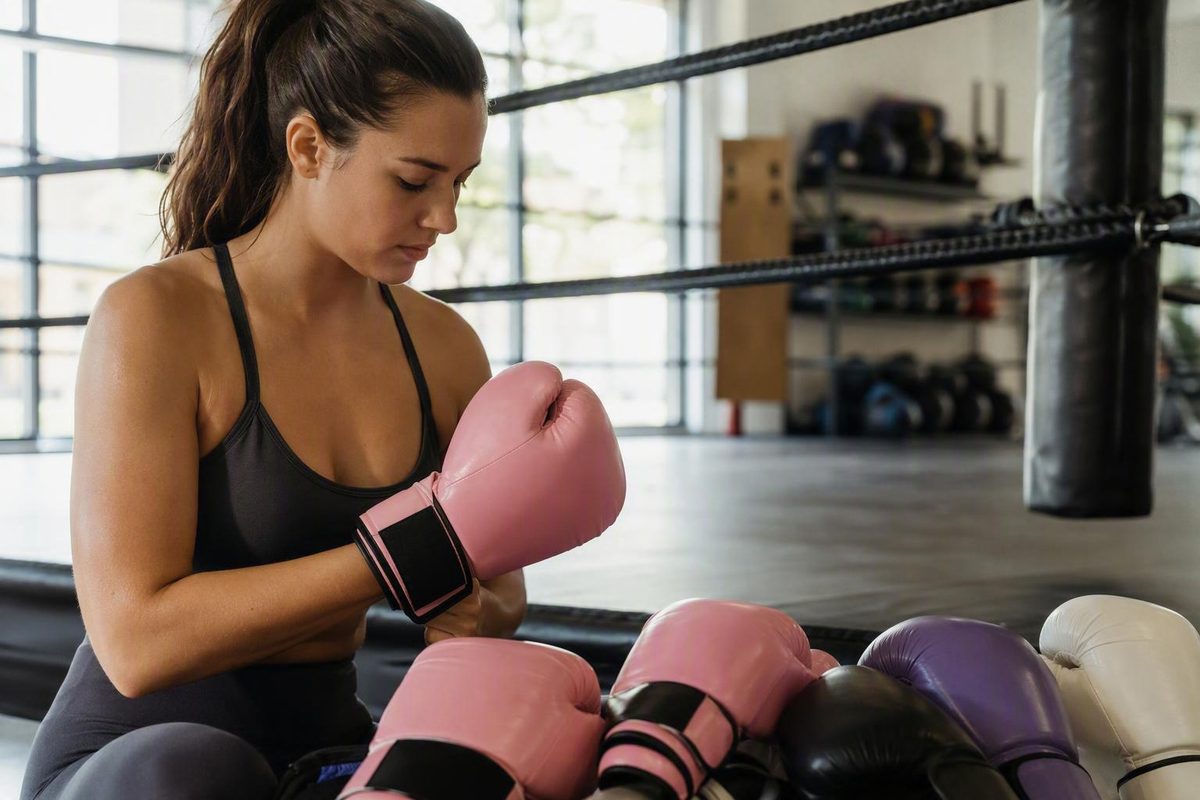
The right ladies boxing gloves are determined by the session, how the model fits over your usual hand wraps, and any coach, gym, or competition requirements—not by a women’s label alone. Choose a provisional ounce range for the activity, measure your hand, and compare model-specific dimensions and return terms before buying.
Quick decision guide: which gloves should you choose?
Use this table to build a shortlist rather than make the final decision. Boxing gloves are sold by ounce weight: the number describes the glove’s mass and broadly relates to padding and intended use. It is not a conventional women’s hand size.
| Intended use | Common starting range | Fit priority | Check before buying |
|---|---|---|---|
| Speed or pad work | 8–10 oz | Close fit without compressed fingers | Coach preference and model fit |
| General training or bag work | 12–14 oz | Stable palm and centered knuckles | Class policy and brand chart |
| Sparring | Often around 16 oz | Secure wrapped fit and acceptable condition | Gym or coach’s exact rule |
| Competition | Event-specific | Required model, weight, and closure | Current rules and certified-equipment list |
These figures are starting points, not universal prescriptions. Hayabusa publishes 8–10 oz for speed and pad work, 12–14 oz for bag work and general training, and 16 oz or more for sparring. Everlast separates its recommendations further by body weight and purpose. Both are manufacturers offering generalized guidance rather than independent standards.
For sparring, many guides begin around 16 oz, but “common” does not mean compulsory or suitable for every boxer. Ask your coach what is permitted before ordering.
Competition requires a different process. Identify the sanctioning body and event first, then verify the exact brand, model, weight, and closure against the current rulebook and certified-equipment list. A retail description such as “competition glove” or “competition ready” does not establish official approval.
If you are buying one first pair for classes, pads, and bag drills, a general training glove in the range accepted by your coach may be the practical starting point. Do not assume that the same pair will automatically be allowed for sparring or competition.
What makes a boxing glove women-specific?
“Women-specific” can refer to possible design variables rather than a single construction standard. When comparing ladies boxing gloves, inspect:
- Internal hand-cavity width and shape
- Wrist-opening size and closure range
- Finger-cavity length
- Thumb position
- Palm proportions
- The range of adjustment around a wrapped wrist
A women’s label alone does not confirm that any of these features differ from a unisex model. It also does not prove that the glove will fit every woman.
Some manufacturers make more specific construction claims. KO Studio says its gloves are built on a hand last shaped for women, rather than simply being resized from a men’s design. Its collection page does not provide internal measurements that would let shoppers compare that shape objectively with other gloves.
Sting describes the Aurora as having a women-specific fit and a lengthened finger cavity. These are attributed seller claims, not comparative evidence that the design fits every woman better than a unisex alternative.
Retail categories can be less precise than product pages. An assortment headed “women’s boxing gloves” may include women-specific models, unisex gloves, MMA gloves, youth equipment, bundles, and accessories. It may offer colors, ounce weights, or letter sizes without disclosing palm width, finger depth, or wrist-opening dimensions. Treat the category label as a search filter, not a fit guarantee.
A unisex glove can be entirely suitable if it passes the same wrapped-hand fit test as any women-specific model. This is particularly relevant for shoppers with combinations such as long fingers and a narrow wrist, where finger depth and closure range may matter more than the gendered label.
Prioritize useful specifications and buying protections:
- A model-specific size chart
- Internal dimensions, where available
- Available ounce weights
- A closure with enough adjustment for your wrapped wrist
- Clear return and exchange conditions
- Stock in the weight required by your coach or gym
If a seller does not disclose an internal measurement, treat it as unknown. Do not infer that a glove has a narrower cavity, shorter palm, or smaller wrist opening merely because it is marketed to women.
Measure your hand and test the fit with wraps
Measure your bare hand before comparing models:
- Keep the hand open and relaxed.
- Place a flexible tape around the widest part of the palm, across the knuckles.
- Exclude the thumb.
- Do not wear hand wraps while measuring.
- Record the result in both inches and centimeters.
- Compare it with the chart for the specific brand and model you are considering.
Everlast instructs shoppers to measure around the palm across the knuckles without the thumb or wraps. Its guide also says to test gloves while wearing wraps and to check finger position and wrist security. The same guide provides the following manufacturer sizing bands:
| Hand circumference | Ounce range | Letter band |
|---|---|---|
| 5–6 in | 8–12 oz | S |
| 6–7.5 in | 12–14 oz | S/M |
| 7.5–8.5 in | 14–16 oz | M/L |
| 8.5–9.75 in | 16–18 oz | L |
This is an Everlast chart, not a universal sizing standard. It also incorporates body-weight bands, so it cannot override the glove’s purpose, another brand’s construction, or your gym’s rules.
Hand circumference and glove weight answer different questions. Circumference helps you investigate whether an internal cavity may fit. Ounce weight identifies the mass category used for particular forms of training. If your gym requires 16 oz for sparring but one 16 oz model feels too roomy, the answer is not automatically to buy a lighter glove. Another 16 oz model may have a more suitable internal shape.
After measuring, test the gloves with the same wraps and wrapping method you use in training. A bare-hand fitting can be misleading because wraps occupy space and change how the hand sits inside the glove.
Use this wrap-on checklist:
- Fingertips: They reach the end without being crushed, bent, or forced to curl.
- Thumb: It rests naturally rather than being pulled outward, twisted, or pressed at the tip.
- Knuckles: They sit beneath the main padding rather than behind or beyond it.
- Palm: The hand does not slide or rotate inside the cavity.
- Circulation: The fit is close without numbness, tingling, or throbbing.
- Wrist: The closure is snug without a gap, slipping, or pinching.
- Grip: You can form the fist the glove is designed to allow without fighting the cavity.
When shopping online, read the return and exchange conditions before trying the gloves. Complete the wrapped fit test indoors. Do not hit a bag, pads, or an abrasive surface until you know whether marked or used gloves remain returnable.
Match the glove type to the session
Glove names describe intended use, but manufacturers do not follow one universal construction recipe. Read the product-level specifications instead of assuming that every glove in a category is built identically.
General training gloves are intended to cover several activities, often including classes, pad drills, and bag work. One versatile training pair can be practical for a beginner who is not yet sparring regularly.
Bag gloves are intended for bag work. A product’s suitability for a heavy bag does not establish that it is appropriate for partner work.
Sparring gloves are marketed for training with a partner. The gym or coach may specify weight, condition, closure style, padding type, or permitted models. Anyone who spars regularly should ask whether separate bag and sparring pairs are expected.
Competition gloves must comply with the relevant event’s requirements. Retail categories and seller descriptions cannot establish eligibility.
MMA gloves commonly have open fingers and an open palm, while conventional boxing gloves use a closed-finger design. They should not be treated as interchangeable. Retail roundups and assortments sometimes place both types under women’s glove categories, which makes a product-level check essential. For contact training involving a bag, pads, or a partner, use hand wraps beneath the appropriate gloves and test the fit with those wraps in place (fit and equipment guidance).
Before using one pair across several activities, confirm that the product is intended for each session and that your coach permits it. A general training glove may cover bags and pads, but that does not automatically make it suitable for sparring or competition.
Compare materials, closures, and disclosed specifications
| Material | Verified basis for comparison | What remains to check |
|---|---|---|
| Cowhide | Animal-leather construction | Hide grade, seams, lining, warranty |
| PU | Synthetic outer material | Surface wear, stitching, padding retention |
| Microfiber vegan leather | Animal-free microfiber option | Exact composition, construction, warranty |
| Engineered synthetic | Model-specific synthetic construction | Performance evidence and service life |
Everlast recommends leather for long-term training and considers PU acceptable otherwise. That is manufacturer guidance, not proof that every leather glove will outlast every synthetic model.
KO Studio says its Contemporary gloves use microfiber vegan leather and its Classic range uses full cowhide. Those are useful specification-level distinctions. They do not independently establish that either range is more comfortable, protective, or durable.
Closures deserve the same disciplined comparison.
For example, the Sting Aurora product page specifies a three-inch hook-and-loop wrist strap and a moisture-absorbent lining. Those are concrete features shoppers can compare. Claims on the same page about protection, balance, punching power, comfort, or reduced fatigue remain seller marketing rather than independent comparative findings.
Before paying, check:
- Available ounce weights
- Internal hand, palm, and finger dimensions
- Outer material and lining
- Padding description
- Closure type and adjustment range
- Full purchase price, not merely an installment amount
- Warranty coverage
- Return and exchange terms
- Stock in the required weight
- Certification status, where relevant
If dimensions, warranty terms, certification, or the total price are not disclosed, record them as unknown. Ratings, retailer labels, and promotional language do not fill those gaps.
Also separate specifications from performance claims. A page may verify that a glove uses cowhide, microfiber, a particular lining, or a certain strap width while providing no comparative evidence for statements about comfort, protection, durability, power, balance, or fatigue.
Check gym and competition requirements before paying
For sparring, ask your coach or gym four direct questions:
- What ounce weight is required for someone of my body weight and experience?
- What condition must the gloves be in?
- Are any closure types prohibited or discouraged?
- Are there brand, model, or padding-style restrictions?
Ask before relying on a generic chart. A manufacturer may describe 16 oz as a common sparring choice, but the gym controls its sessions and may apply different requirements.
For competition, identify the sanctioning body and event, read the current rulebook, and check the exact model—not merely the brand—against the current certified-equipment resource. Rules and equipment lists can change, so repeat the check close to the event date.
For example, USA Boxing’s official rulebook page links a National Rule Book effective January 1, 2026, and a certified-equipment resource updated July 2, 2026. The page excerpt does not establish a particular glove-weight requirement here or confirm that any glove discussed in this guide is certified.
Treat phrases such as “competition glove,” “competition ready,” or “for training and competition” as seller descriptions unless the exact model appears in the applicable official rules or equipment list. Approval by one organization also does not establish approval for another event.
Do I need hand wraps under boxing gloves?
For contact work involving bags, pads, or partners, wear hand wraps beneath the gloves. Fit the gloves while wearing the same wraps and using the same wrapping method you train with. If you change to thicker wraps or place more material across the knuckles, repeat the fit check (hand-wrap guidance).
Do smaller hands automatically need lighter boxing gloves?
No. Ounce weight describes the glove’s mass, not a direct hand-size measurement. Smaller hands may need a narrower or shorter internal cavity, but the appropriate weight also depends on the session, body weight, coach guidance, and gym or competition rules. If the required ounce weight feels too roomy, compare another model with a different internal shape rather than assuming you must move to a lighter glove.
Can women wear unisex boxing gloves?
Yes. A unisex glove can be suitable when it fits the wrapped hand correctly and is permitted for the intended session. The women-specific label is useful only when the underlying cavity, finger length, thumb position, palm shape, and closure range suit the wearer.
Choose in five steps: select the session, identify a provisional ounce range, measure your hand, test the wrapped fit, and confirm the coach, gym, or competition rules. The right purchase is a glove that suits its intended use, fits securely, is in acceptable condition, and is permitted for the training—not simply one marketed to women.