
Choose the Right Bag, Gloves, and Mitts for the Way You Train
Clarifies each component, maps gear to solo bag work, partner mitt drills, or sparring, and explains glove choice and fit over wraps.
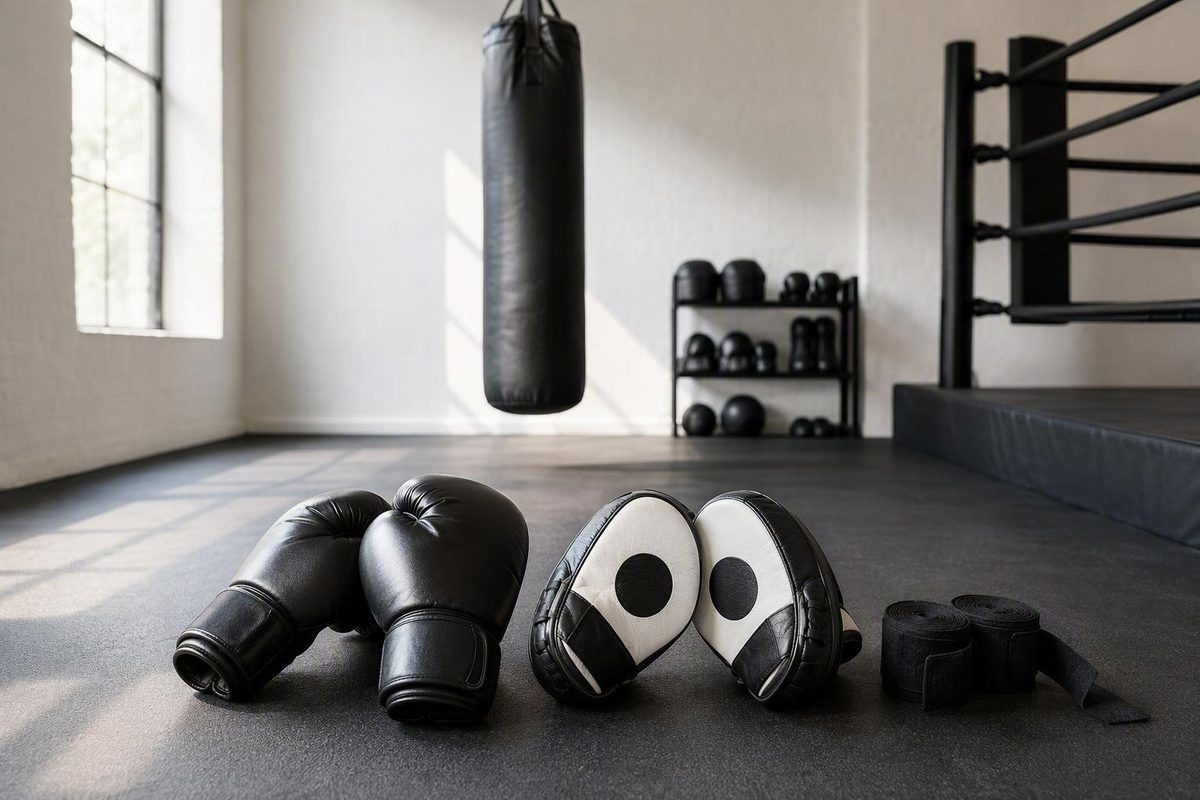
A “punch bag and mitts” purchase is not necessarily one complete kit. First decide whether you will train alone on a bag, punch focus mitts held by a partner, or spar. Then treat the bag, wearable gloves, hand wraps, and trainer-held mitts as separate components unless the listing explicitly includes them. This guide helps you clarify those components, plan the right setup, and choose gloves by intended use and fit over wraps; it does not attempt to rank individual bags or focus mitts without independent comparative testing.
First, clarify what “punch bag and mitts” means
Terminology at a glance
- Bag mitts: Compact gloves worn by the person punching the bag.
- Bag gloves: Wearable gloves designed specifically for punching-bag sessions.
- Training gloves: More versatile gloves intended for activities such as bags, pads, mitts, and drills.
- Sparring gloves: Gloves selected for partner sparring under a coach’s or gym’s rules.
- Focus mitts: Handheld targets worn by a trainer or training partner—not by the puncher.
Retailers use “mitts” inconsistently. It may mean focus mitts held as targets, but it also appears in wearable product names such as “Bag Mitts.” Product titles alone therefore cannot tell you whether the item is worn by the puncher or held by a partner.
Check the images, description, quantity, size options, and included-items field.
Promotions require the same scrutiny. RDX, for example, lists dedicated 4 oz bag gloves and mitts and has advertised free bag gloves with qualifying free-standing punch bags. That conditional offer does not mean every product page includes a bag, gloves, wraps, and focus mitts as one set. Confirm the promotion terms and every component before paying. Check the RDX bag-glove collection and promotion.
Pick the setup that matches your training
| Training path | Required equipment | Suitable glove category | Key caution |
|---|---|---|---|
| Solo bag work | Appropriate punch bag, hand wraps, wearable gloves | Dedicated bag gloves or suitable training gloves | Focus mitts are unnecessary |
| Partner focus-mitt work | Wraps and gloves for the puncher; separate focus mitts for the holder | Versatile training gloves | “Mitts” may mean either product |
| Sparring | Wraps, sparring gloves, and gym-required equipment | Purpose-appropriate sparring gloves | Do not assume bag gloves are acceptable |
For solo training, select the bag around the kind of session you want. Manufacturer guidance describes reflex bags as serving reflex and footwork goals, while heavier bags serve different training goals. Beyond that broad distinction, installation, mounting, filling, floor-space, and structural requirements must be checked against the instructions for the specific product and training location.
For partner mitt drills, the puncher needs wraps and suitable gloves, while the partner needs a separate pair of trainer-held focus mitts. Because the available evidence does not support a detailed comparison of focus-mitt shapes or construction, use the listing to verify that the product is genuinely trainer-held, sold as a pair, appropriately sized for the holder, and covered by workable return terms. Do not substitute wearable bag mitts.
If one pair of gloves must cover bag, pad, and technique drills, a general training glove is the more adaptable category. Sparring remains a separate decision: ask the coach which glove type and weight the gym permits, and do not automatically carry dedicated or heavily used bag gloves into partner work.
Equipment should also fit into a broader learning sequence. Stance and footwork come before punching mechanics, so bag and mitt drills should reinforce balance, guard, and controlled technique rather than replace them.
Choose glove weight as a starting point, not a universal rule
Everlast recommends 12–14 oz gloves as a general training category for pads, mitts, bags, and drills. Its bag-and-mitt chart provides the following reference ranges. These are manufacturer recommendations, not an independent safety standard or a universal prescription. See Everlast’s boxing-glove sizing guidance.
| Body weight | Everlast’s bag-and-mitt range |
|---|---|
| Below 100 lb | 6–10 oz |
| 100–150 lb | 10–12 oz |
| 150–175 lb | 12–14 oz |
| Above 175 lb | 14–16 oz |
Everlast also says heavier gloves generally provide more padding and less speed. That describes a broad tradeoff; it does not guarantee a particular level of protection or make body weight sufficient for selecting a glove.
Also consider:
- Hand circumference and finger length
- Fit while wearing your normal wraps
- Intended bag, pad, or mitt activity
- Punching intensity and session volume
- Padding distribution and internal glove shape
- Wrist support and closure design
- Comfort when forming a complete fist
- Coach or gym requirements
Compact 4 oz bag mitts are commercially available for bag training, but their existence does not make them suitable for every beginner, heavy-bag session, or high-intensity workout. When comparing a compact mitt with a fuller glove, prioritize secure fit, full fist closure, stable wrist positioning, and suitability for the planned session—not the smallest profile or lowest ounce number.
Use this in-store or at-home fit checklist
Assess gloves while wearing the hand wraps you intend to use. A glove that feels correct on a bare hand may become cramped once the hand is wrapped.
- Finger reach: Your fingers should extend properly into the glove without being compressed.
- Fist closure: You should be able to make a complete fist. Reject a glove that forces the hand open or obstructs closure.
- Internal stability: Move the hand and form a fist several times. It should not slide or rotate inside the glove.
- Wrist closure: Fasten the glove as you would for training. It should feel snug and supportive without slipping, pinching, or restricting circulation.
- Internal shape: Check whether the finger compartment, thumb position, and pre-curve suit your hand.
- Padding and bulk: Assess how the padding is distributed rather than relying only on the printed ounce weight.
- Repeatability: Remove and refit both gloves. For solo training, make sure you can secure them consistently without help.
Try gloves in person where possible. When buying online, prioritize clear sizing information and a practical return or exchange policy because two models carrying the same ounce label may have different internal shapes.
Compare bag mitts, bag gloves, and training gloves
| Category | Intended use | Practical characteristic | Main limitation |
|---|---|---|---|
| Compact bag mitts | Bag and speed-oriented work | Lower-bulk wearable design | Less padding than fuller gloves; not for every session |
| Dedicated bag gloves | Repeated punching-bag work | Purpose-built for bag training | Not automatically suitable for sparring |
| General training gloves | Bags, pads, focus mitts, and drills | Versatile across several activities | One design may not be ideal for every activity |
| Sparring gloves | Controlled partner sparring | Selected around partner work and gym rules | Should not be chosen solely as a bag glove |
Retailer guidance for fuller bag gloves emphasizes features such as impact-resistant foam, wrist support, relatively low bulk, and a shaped pre-curve. These are useful specifications to compare, but they are commercial descriptions rather than independent proof that one model provides better protection or durability. Review TITLE’s bag-glove selection guidance.
General training gloves are the flexible option for someone alternating among bags, pads, and partner-held mitts. Everlast places 12–14 oz gloves in this general training category, but fit and intended use remain more important than following a single ounce recommendation.
Closure affects usability.
Do not assume dedicated bag gloves are acceptable for sparring. The glove category, condition of the padding and striking surface, and the coach’s or gym’s requirements should determine what is used for partner work.
Check the complete cost and contents before buying
Before comparing prices, verify whether the listing includes:
- The bag itself
- A fillable base or hanging chains
- Bracket or mounting hardware
- Bag filling
- Wearable gloves or bag mitts
- Hand wraps
- Trainer-held focus mitts
- Shipping charges and heavy-item exclusions
- Return or exchange terms
- Replacement parts
At the lower end of the observed listings, RDX displayed wearable bag gloves and mitts at $16.99, with other models priced higher. Prices, promotions, stock, colors, and shipping terms are time-sensitive, so use the current product page rather than treating that figure as a fixed market price. Check current RDX prices and terms.
At the upper end, Rival displayed bag gloves priced as high as $249.95. Its collection also used labels such as “Best Seller” and “Top Gift,” but those are merchandising labels rather than comparative evidence of fit, protection, or durability. Check Rival’s current bag-glove collection.
A higher price, discount, review count, or retailer badge cannot establish that a glove fits your hand or suits your training. Prioritize the stated intended use, available dimensions, closure, padding layout, return terms, and fit over wraps. Without independent comparative testing, named products should not be ranked as the safest, most protective, or most durable choices.
Treat any supposed “punch bag and mitts” bundle as unverified until the seller identifies every component. A useful home bag package may still omit wraps or trainer-held focus mitts, while a focus-mitt set may contain no punch bag or wearable gloves.
Train with the equipment only after the fundamentals are in place
Start with controlled technique and obtain coaching feedback before increasing speed, volume, or intensity.
For a basic jab progression:
- Establish a balanced stance and stable guard.
- Send the lead hand straight to the target without pulling it backward first.
- Return the hand promptly along the same line to guard.
- Correct telegraphing, a dropped return, arm-only punching, and overreaching before adding intensity.
Boxing Learn’s jab guide includes three heavy-bag rounds focused on jab snap. That is a drill structure, not a guarantee that following a fixed schedule will produce a particular result. Read the jab mechanics and drills guide.
Boxing is a contact sport with real risk, and written instruction does not replace a qualified coach or proper equipment. Technique, equipment condition, and the rules of the gym all remain important when moving from solo drills to partner work. See Boxing Learn’s training qualification.
Do hand wraps need to fit under bag gloves?
Yes. Try on bag or training gloves over the wraps you intend to wear so you can assess the actual training fit. Your fingers should not be compressed, you should be able to close a complete fist, your hand should not shift internally, and the wrist closure should remain snug without pinching or restricting circulation.
Allowing room for wraps does not mean buying a loose glove. The target is a secure wrapped-hand fit, not unused space around the hand.
Does a “punch bag and mitts” listing always include the bag?
No. “Mitts” may mean wearable bag mitts or trainer-held focus mitts, and many listings contain only gloves. Confirm the included-items list rather than relying on the title or product category.
For a claimed bundle, verify the bag, base or chains, mounting hardware, filling, wearable gloves, wraps, and trainer-held focus mitts individually. A promotion offering free gloves with a qualifying bag does not establish that every related listing is a complete set.