
Choose the Right Wraps—and Fit Them Without Numb Fingers
Start with 180-inch cotton or semi-elastic wraps, then follow a seven-step sequence and fit checks to catch bulk, numbness or restricted movement.
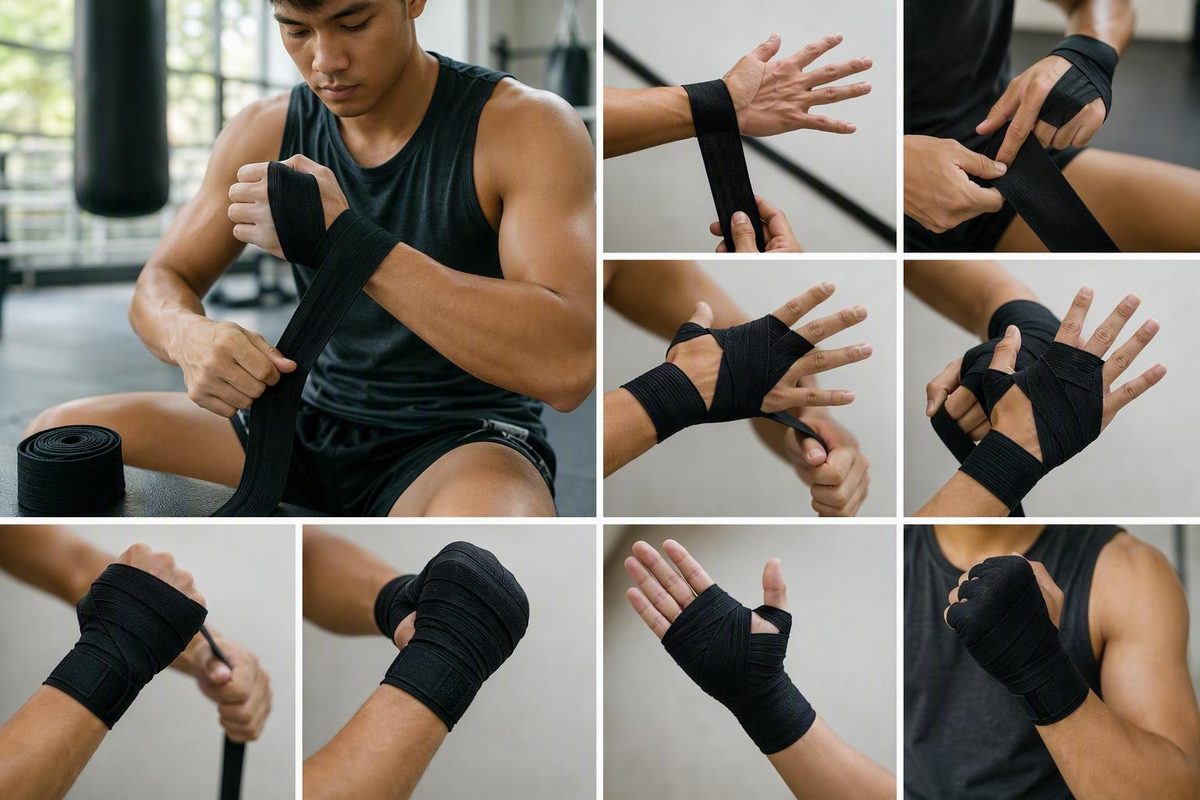
For many adults learning Muay Thai, a pair of 180-inch traditional cotton or semi-elastic wraps is a practical starting point. That length provides enough material for substantial wrist coverage, the thumb, all three finger gaps, and layered knuckle coverage in common wrapping methods. Everlast’s wrap guide compares the added coverage of 180-inch wraps with 120-inch alternatives.
Treat that as a starting point, not a rule. If the finished wrap crowds your palm or makes your glove uncomfortably tight, change the routing or try a shorter or thinner wrap. Whatever you choose should lie flat, remain stable, and let you open and close your hand without pain, numbness, or restricted movement.
The short answer: what to buy for Muay Thai training
Hand wraps add padding, stabilize the wrapped hand and wrist, absorb sweat, and help manage fit inside a glove.
Choose the format by balancing coverage, tension control, application time, bulk, reusability, and training context:
| Format | Stretch and tension control | Application speed and likely bulk | Reusability and typical context |
|---|---|---|---|
| Traditional cotton | Stretch: little. Adjustment: high control through the placement and tension of each pass. | Speed: slowest of the reusable options. Bulk: depends on length, fabric thickness, and layering. | Reuse: yes. Context: regular bag, pad, and sparring sessions. |
| Semi-elastic or Mexican-style | Stretch: moderate and product-dependent. Adjustment: highly adaptable, but aggressive stretching can make the wrap too tight. | Speed: similar to cotton. Bulk: often conforms closely, although poor routing can still create thick areas. | Reuse: yes. Context: everyday training for people who prefer a more conforming feel. |
| Quick or gel-style | Stretch: product-dependent. Adjustment: limited compared with controlling each pass of a traditional wrap. | Speed: fastest. Bulk: padded sections may crowd some gloves. | Reuse: yes. Context: convenience, short preparation times, or users who struggle with long wraps. |
| Gauze and tape | Stretch: depends on the permitted materials. Adjustment: highly customizable when applied by someone experienced. | Speed: slow and unsuitable for quick self-application. Bulk: depends on the regulated method and application. | Reuse: no. Context: competition-style wrapping, commonly applied by a coach, trainer, or cornerman. |
Traditional cotton feels firm and does not stretch much as the hand changes shape. Semi-elastic fabric follows the contours of the hand more readily, but stretching every pass firmly can create excessive compression.
Commercial guidance is divided over which material is easier for beginners. Some retailers favor the adaptability of semi-elastic wraps, while others describe cotton as easier to control. Neither material should be treated as universally superior. Fit, technique, and personal preference matter more than the label.
They save time, but thickness and fit vary by model. Test them inside your actual gloves rather than assuming that “quick” means low bulk or that they offer the same routing and tension adjustment as traditional wraps.
A practical first purchase: choose 180-inch cotton if you prefer a firm, fixed feel, or 180-inch semi-elastic wraps if you want fabric that conforms more readily. Choose quick wraps primarily for convenience, after checking that their padded sections fit comfortably inside your gloves.
Choose the right length without confusing inches and centimeters
A 180-inch wrap is useful when your method includes substantial wrist coverage, thumb stabilization, passes through all three finger gaps, and more than one layer over the knuckles. It is not mandatory for every adult. Hand size, fabric thickness, preferred routing, and the space inside the glove all affect how much material you can use comfortably.
Retail guidance also uses several metric lengths, including three, four, and 4.5 meters. The following are rounded conversions calculated from those listed measurements; one retailer’s guide, for example, distinguishes among three-meter, four-meter, and 4.5-meter wraps.
| Labelled length | Approximate equivalent |
|---|---|
| 120 inches | 3.05 meters |
| 180 inches | 4.57 meters |
| 4 meters | 157.5 inches |
| 4.5 meters | 177.2 inches |
| 180 centimeters | 70.9 inches |
The crucial distinction is between 180 inches and 180 centimeters. They are not interchangeable: 180 inches is approximately 4.57 meters, whereas 180 centimeters is approximately 70.9 inches. A Thai Boxing Institute guide recommends 180 centimeters while also displaying products labelled 180 inches, leaving an unresolved unit inconsistency. Do not order based only on the number “180.”
Likewise, “full length” is not a universal measurement. A four-meter wrap is about 157.5 inches, making it approximately 22.5 inches shorter than a 180-inch wrap. That difference does not automatically make it unsuitable: four meters may still provide enough material for a particular hand, fabric, and method.
Use this selection path:
- Try 180 inches for full coverage. It gives you room for the wrist, thumb, all three finger gaps, and layered knuckle passes.
- Consider 120 inches for smaller hands or a simpler method. It may also suit someone who consistently finishes with excessive material.
- Put the glove on after wrapping. A length is unsuitable if using it creates thick palm layers, pressure points, or an overfilled glove.
- Change one variable at a time. Before buying another length, remove unnecessary palm passes or redistribute material between the wrist and knuckles.
- Try shorter or thinner fabric if the result remains bulky.
A short wrap is not a bargain if you cannot cover the areas your coach expects without pulling it excessively tight. The objective is not to consume every inch at any cost. It is to build a flat, repeatable structure that fits your hand and glove.
A beginner wrapping sequence that covers the essentials
Coaches vary the direction, order, and number of passes. The sequence below is one common starting method, not the only correct way to wrap Muay Thai hand wraps. It uses approximately three wrist passes and three initial knuckle passes, consistent with one Muay Thai gym’s beginner wrapping sequence.
-
Thumb loop and starting position — path: thumb to wrist Put your thumb through the loop and take the fabric across the back of the hand. Check which side of the hook-and-loop tab needs to face outward when you finish. Keep the fabric flat and remove twists immediately.
-
Build the wrist base — path: around the wrist Hold your wrist straight and make approximately three snug passes. Overlap them evenly rather than stacking all the fabric on one narrow line. Support should come from clean placement, not maximum tension.
-
Cover the knuckles — path: wrist to back of hand to knuckles Bring the wrap diagonally over the back of the hand. With your fingers slightly spread, make approximately three flat passes around the knuckles. Keep the lower edge clear of the palm crease so you can close your fist.
-
Stabilize the thumb — path: knuckles to thumb and back Route the fabric around the thumb and return across the back of the hand. The loop should feel secure without forcing the thumb inward or restricting normal movement.
-
Fill all three finger gaps — path: pinky side toward index side Begin between the pinky and ring finger, return diagonally across the back of the hand, and anchor the pass toward the wrist or thumb base. Repeat between the ring and middle fingers, then between the middle and index fingers.
-
Add a second knuckle layer — path: back to knuckles If enough fabric remains, make another flat pass or series of passes over the knuckles. Avoid repeatedly feeding excess material through the center of the palm.
-
Finish at the wrist — path: hand to wrist Use the remaining material around the wrist and secure the hook-and-loop closure. Position the closure where it does not form an uncomfortable ridge inside the glove.
Test the result immediately. Open your hand fully, spread your fingers, close the hand, form a fist, and relax again. The fabric should remain flat and stable through each position. If it shifts, pinches, or restricts movement, unwind to the faulty section rather than adding tension over it.
Ask your coach to inspect the finished wrap before hard bag work, pad rounds, or sparring. Online instructions can show the route, but they cannot see how the wrap interacts with your hands, gloves, and punching mechanics.
Fit checks and fixes for common wrapping faults
The target is snug and stable, not compressed as tightly as possible. Gym guidance advises adjusting or rewrapping if the result causes numbness, tingling, color change, discomfort, or restricted movement; the hand should still open and close normally during the fit test. See the TAG Muay Thai fit guidance.
Perform the test twice:
- Before the glove: open the hand, spread the fingers, move the thumb, make a fist, and relax.
- Inside the glove: repeat those movements and check whether the glove introduces pressure or reveals excessive bulk.
| Symptom | Likely wrapping issue | Corrective action |
|---|---|---|
| Numb or tingling fingers | Excessive tension, particularly if elastic fabric was stretched firmly | Remove the wrap and reapply it more gently; do not continue through the symptom |
| Knuckle layers shift | Loose, twisted, or poorly anchored fabric | Lay the fabric flat and use back-of-hand crossovers to anchor the layer |
| Palm feels overfilled | Too many palm passes or more material than the method needs | Reduce palm routing or try a shorter or thinner wrap |
| Glove will not fit comfortably | Excess knuckle or palm bulk, or an incompatible quick wrap | Rewrap with flatter layers or change the wrap format |
| Wrist coverage feels inadequate | Too little material allocated to the wrist | Redistribute material toward the wrist instead of pulling every pass tighter |
| Fabric forms a ridge | A twist or fold has been covered by later layers | Unwind to the fault and lay that section flat |
| Wrap loosens when making a fist | Inconsistent overlap or inadequate anchoring | Reapply with controlled overlap and firm, but not extreme, tension |
If your fingers become numb or tingle, remove the wrap promptly and check whether normal comfort and movement return.
A coach can correct application and equipment fit, but persistent symptoms may require assessment beyond coaching.
Wash, dry, and replace reusable wraps
Wraps absorb sweat directly from your hands, so clean them frequently. Several gym and retailer guides advise washing after every use, but the care label for your particular fabric and closure should take priority.
To keep reusable wraps manageable:
- Fasten the hook-and-loop tab so it does not catch other fabric.
- Put the wraps in a mesh laundry bag to reduce tangling.
- Use cold water when that matches the manufacturer’s instructions.
- Air-dry them fully unless the care label expressly permits another method.
- Avoid excessive heat with elastic blends because it can damage elastic material, as noted in Fairtex partner guidance on elastic wraps.
- Do not roll up or seal away sweaty wraps while they are damp.
If you cannot wash them immediately, separate and hang them somewhere ventilated rather than leaving them compressed in a closed gym bag. Rotate enough pairs for each washed set to dry completely before its next use. The required number depends on how often you train and how quickly your laundry dries.
Replace a pair when its condition begins to affect application or hygiene:
- The edges are heavily frayed or torn.
- The fabric repeatedly bunches and no longer lies flat.
- Semi-elastic material has lost useful stretch or recovery.
- Odor remains after proper washing and complete drying.
- The thumb loop is damaged.
- The hook-and-loop closure opens or no longer holds securely.
Do not rely on a fixed lifespan. Wear depends on material, training frequency, washing, drying conditions, and how aggressively the fabric is stretched. Condition matters more than the calendar.
Training wraps and competition wraps are not automatically interchangeable
Reusable cotton or semi-elastic wraps are intended for repeated gym use. Competition applications may instead use regulated gauze and tape or another specifically permitted format fitted under supervision. Ordinary gym wraps—and especially quick wraps—should not be assumed compliant with a contest’s rules.
Requirements depend on the governing organization and the particular competition. Under IFMA’s brief coach and manager guide, regulated soft surgical bandaging or Velcro hand wraps are permitted within specified limits, and equipment is fitted or checked under supervision. The brief guide does not provide the current numerical length and width limits in the supplied text, so those measurements should be confirmed in the current full rules.
An older IFMA rules document from 2016 contains a dedicated section for bandages, but the available table of contents does not establish usable dimensions, materials, or current taping limits. It should not be used to infer modern measurements or applied automatically to professional promotions, interclubs, local contests, or events run under other rules.
Before competing:
- Consult the current full rulebook for the event.
- Ask your coach what materials and wrapping method will be used.
- Confirm the requirements with the event official or rules representative.
- Bring the specified supplies rather than assuming your everyday wraps will pass inspection.
Can boxing hand wraps be used for Muay Thai?
Yes. Reusable wraps sold for boxing and Muay Thai are generally interchangeable. What matters is whether the material, length, thickness, and closure suit your hand, wrapping method, gloves, and coach’s requirements.
A Muay Thai coach may place different emphasis on the wrist or thumb because of the training context, but you do not ordinarily need a separate product simply because its packaging says “boxing.” That does not make every boxing wrap compliant with Muay Thai competition rules.
Should I wear wraps for light bag or pad work?
Some coaches recommend wraps even for light bag or pad sessions because they add padding, stabilize the wrapped hand and wrist, absorb sweat, and reproduce the fit used for harder training. Consistent use also gives you more practice applying the same method.
Gym requirements differ, so follow your coach’s equipment rules. Do not treat a “light” session as a reason to continue through hand or wrist pain.
How many pairs of Muay Thai hand wraps should I own?
Own enough pairs to avoid reusing damp wraps. The practical number depends on your training frequency, laundry routine, and drying time.
Someone training on consecutive days will need a larger rotation than someone attending one weekly session. Instead of targeting a universal number, make sure each used pair can be washed, opened out, and dried completely while another clean pair is available.
Choose Muay Thai hand wraps by fit and intended use rather than branding alone. Start with a common full-length cotton or semi-elastic pair if it suits your hands and gloves, then adjust the length, thickness, or format if the finished wrap is bulky. Learn a flat, repeatable method, rewrap immediately when sensation or movement is affected, have a coach inspect your work, and confirm the current rules before any competition.