
Six beginner boxing drills to check balance, guard and movement
Practise six beginner boxing drills with clear setups, common-fault fixes and checkpoints, plus a short solo session and an optional heavy-bag variation.
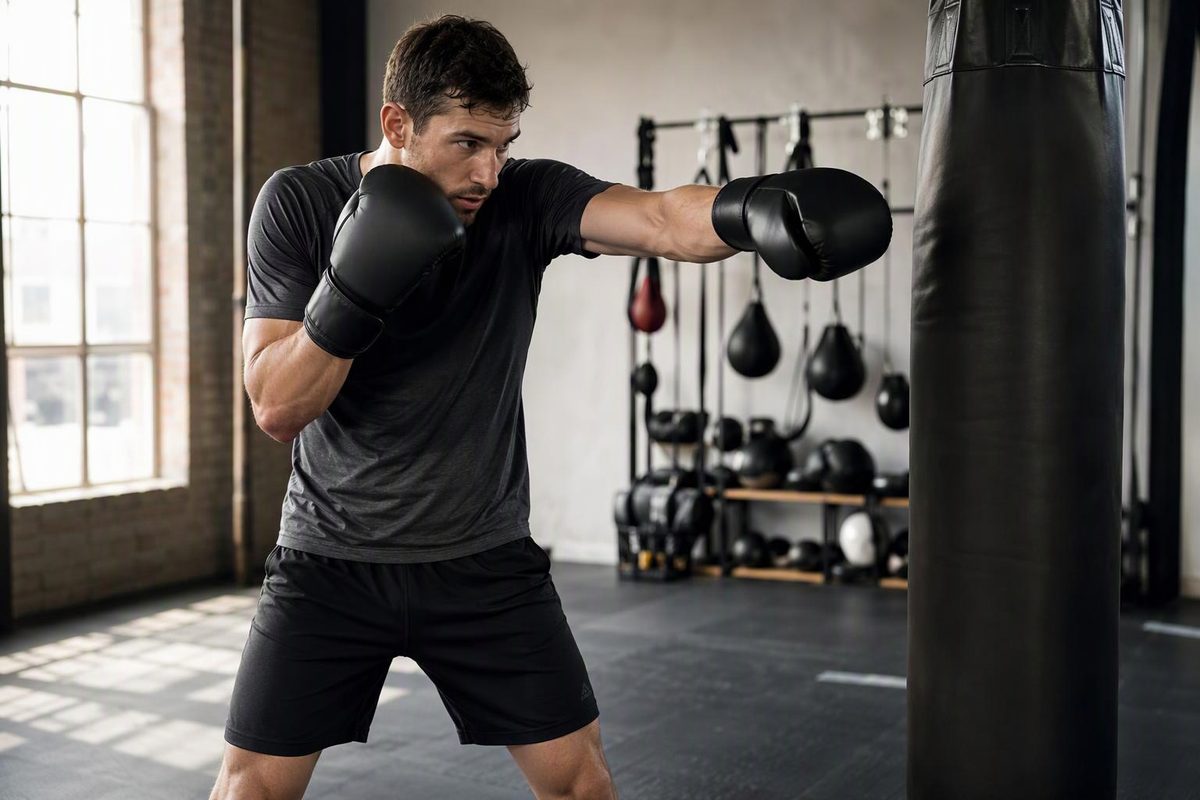
Use these boxing drills to work on one fault at a time: feet coming together, a jab that drops on its return, or a combination that leaves you leaning forward. Start with stance and movement, then add punches and a defensive exit.
You need clear floor space and a timer. A mirror or short phone recording can help you check your position, but neither replaces feedback from a boxing coach. These are solo, non-contact drills—not a test of readiness for sparring.
Set up before the first round
Warm up with easy jogging or marching, controlled joint movements and gentle boxing steps. England Boxing’s coaching handbook recommends a 10–15-minute warm-up combining pulse-raising activity, dynamic mobility and boxing-specific movements. Check that your floor is non-slip and free of obstacles. Source: England Boxing coaching handbook
Use your usual stance: left foot and hand forward for orthodox; right foot and hand forward for southpaw. Lead means the front side; rear means the back side. Keep your knees soft, chin gently tucked and hands near your cheeks. Leave both width and front-to-back distance between your feet.
Work slowly enough to see the fault. When punching into the air, extend smoothly without snapping your elbow into a hard lock.
1. Stance-and-freeze drill
Fault: You finish a movement with your feet too narrow or your body tipping forward.
Setup: Face an imaginary opponent in your boxing stance.
Action: Make one small step forward with the lead foot, bring the rear foot with you and pause. Step back, rear foot first, and pause again. Repeat without punching. At each pause, check your feet, knees, hands and head position.
Checkpoint: You can move in either direction without first rocking your body or rearranging your feet. If you cannot, shorten the step.
The pause is a check, not a habit to carry into live boxing. Once your position stays consistent, make the steps continuous.
2. Four-direction footwork drill
Fault: Your feet cross or come together when changing direction.
Setup: Use a clear patch of floor. Begin with the stance you checked in drill one.
Action: Take one short step forward, back, left and right, resetting between directions. Move the foot nearest the direction of travel first; let the other follow by a similar distance. Keep your hands up and avoid a big bounce.
Checkpoint: Your stance remains roughly the same shape after every step. If the second foot catches up too far, reduce its travel.
England Boxing’s footwork guidance emphasises maintaining the base, avoiding crossed legs and using short, smooth movements. Source: coaching handbook, footwork section
For more detailed setup cues, see the beginner boxing footwork guide.
3. Jab-and-return drill
Fault: Your jab returns low, or your rear hand leaves your face.
Setup: Stand still in stance, with a mirror far enough away that you cannot touch it.
Action: Throw one relaxed jab—the straight lead-hand punch—then return it directly to guard. Keep the rear hand near your cheek throughout. Reset before the next repetition; do not pull the jab back before throwing it.
Checkpoint: Both hands are back in position before your next punch, and your chin has not lifted. Watch the return, not just the extension.
If the jab mechanics are unfamiliar, start with the jab, built from stance up.
4. Jab–cross balance drill
Fault: The rear straight punch pulls you forward or twists you past the target.
Setup: Stay stationary and choose an imaginary target straight ahead.
Action: Throw a jab, then a cross—the straight rear-hand punch. Let the rear foot turn on its ball as your hip and shoulder rotate. Recover both hands and briefly pause in stance. Keep the non-punching hand at guard during each shot.
Checkpoint: You can immediately take a short step back without a stumble or an extra balancing step. If not, reduce your reach and rotation.
England Boxing identifies leaning in, over-rotation and a wandering lead hand as common rear-straight faults; it also recommends keeping beginner combinations simple. Source: coaching handbook, punching sections
5. Jab–retreat–reset drill
Fault: You admire your punch instead of recovering and moving.
Setup: Allow enough clear space behind you for a short backward step.
Action: Jab, recover your hand, then push gently from the front foot to step back with the rear foot first. Let the front foot follow without closing the stance. Once balanced, step forward again and reset.
Checkpoint: Your hands stay up throughout, your eyes remain forward and your feet never meet.
This rehearses a basic foot defence. Without an opponent, it does not test whether your retreat actually clears a punch.
6. One-theme shadow-boxing drill
Fault: Unstructured shadow boxing turns into rushed punching with no guard recovery or exit.
Setup: Choose one theme: finish every attack balanced, guarded and ready to move.
Action: Move lightly, throw either a single jab or a jab–cross, recover your guard, then take a short backward or sideways step. Reset before choosing the next attack. Keep the pace easy; do not add more punches just to fill the round.
Checkpoint: Review a short recording. After each sequence, could you move again without fixing your stance first?
England Boxing’s shadow-boxing guidance encourages a clear focus and reflection on position, range and balance. Source: shadow-boxing drills with Mick Driscoll
Put the drills into a short session
After warming up, try 90 seconds per drill, with 30 seconds between drills—nine minutes of practice plus two and a half minutes of rest. This is a suggested starting format, not a required workload. Shorten a round or rest longer when your form deteriorates.
If one fault keeps appearing, repeat that drill rather than adding complexity. Progress by removing pauses, then modestly increasing pace while keeping the same checkpoints.
Optional heavy-bag variation: Replace drill three with light single jabs on a secure bag. Adjust distance with your feet rather than leaning; recover your guard after each contact. Wear properly fitted wraps and suitable padded gloves, keep the wrist straight and stop if punching causes pain. England Boxing stresses hand wrapping and appropriate gloves whenever hitting equipment. Source: coaching handbook, hand protection
Keep contact practice separate. Ask a qualified boxing coach to supervise partner drills and assess your technique before introducing incoming punches.