
Parrying in Boxing: A Small Defense That Sets Up the Counter
Learn how to parry a boxing jab without reaching or losing your guard, then build the skill through solo, partner and decision drills.
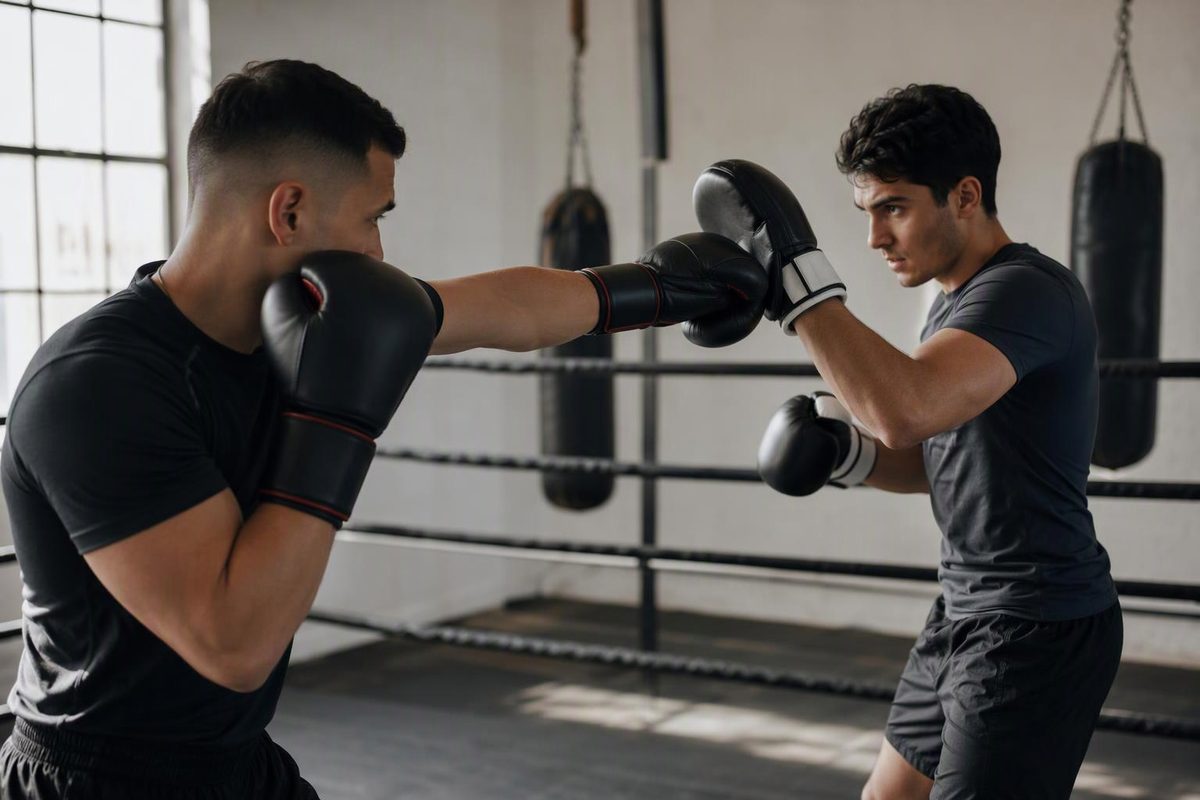
A parry redirects an incoming punch with a short hand movement. Unlike a block, which receives the punch on the guard, a parry nudges the shot off its line. Unlike a slip, it does not depend on moving your head away from the punch.
The key word is short. England Boxing teaches the parry as a hand defense made with a short inward rotation from the guard. Its listed faults include moving the hand too far sideways, reaching for the shot, lifting the elbow and failing to return to guard (England Boxing Coaching Handbook, Part 1).
Start with the rear-hand parry against a jab
For a beginner facing an opponent in the same stance, start by using the rear hand against the opponent’s lead hand:
- An orthodox boxer uses the right hand against an orthodox opponent’s left jab.
- A southpaw uses the left hand against a southpaw opponent’s right jab.
The hand you use ultimately depends on the line of the incoming punch. Against an opposite-stance opponent, do not force the same rear-hand response into every position; practise the appropriate defense with your coach.
Setup
Take your normal stance with your chin down, eyes on the opponent and both gloves in guard. Keep your elbows relaxed and tucked. Work at a range where the jab can reach without either boxer leaning.
If your stance shifts whenever a punch comes toward you, review balanced boxing footwork before adding speed.
Action
- Wait for the jab to enter range. Do not reach toward the opponent’s shoulder or react with a large early movement.
- Rotate the rear glove inward. Move from the guard with a compact turn rather than swinging the whole arm.
- Deflect near the wrist. Move the jab only far enough to clear your center line; do not try to swat it across the ring.
- Keep the elbow close to its starting position. The hand moves without the shoulder or elbow flaring wide.
- Return immediately to guard. The glove finishes back by your cheek, not at chest height.
After the parry, your feet should still be under you, your posture should be unchanged and both hands should be ready to defend or counter.
Add the counter after the defense is clean
A rear-hand parry leaves the lead hand free. England Boxing presents a block or parry against a straight lead to the head as a suitable base for a straight lead-hand counter (England Boxing Coaching Handbook, Part 1).
Use this sequence:
- Parry with the rear hand.
- Send the lead hand straight to the target.
- Bring both hands back to guard.
- Reset your feet or move to a new angle.
Do not enlarge the parry to manufacture an opening. A wide swat can leave you vulnerable if the jab was a feint. Build the counter with the same compact mechanics used for a clean jab.
Common parrying faults and fixes
Swatting too wide
What it looks like: The glove travels outside the shoulder and the elbow lifts away from the ribs.
Fix: Shadow-parry with a folded towel held lightly under the parrying-side armpit. Make 20 slow repetitions without dropping it. The towel is a movement constraint, not a reason to clamp your arm rigidly.
Reaching for the punch
What it looks like: The arm extends before the jab is close, opening a gap between glove and face.
Fix: With both boxers wearing gloves, have a partner feed slow jabs toward your guard under a coach’s supervision. Use agreed light contact and do not move until the glove enters the space immediately in front of your guard. If your elbow straightens, you reached too soon or the starting range was too long.
Pushing the punch downward
What it looks like: The rear hand drops toward the waist, leaving the head open for the next shot.
Fix: Put a piece of tape at cheek height on a mirror. After every shadow parry, return the glove to that marker before repeating.
Watching the glove
What it looks like: The eyes chase the jab, the chin rises, or the boxer blinks and turns away.
Fix: Use very slow partner feeds while keeping a broad view of the partner’s upper body. Reduce the pace until you can keep your eyes open and your posture unchanged.
Parrying every feint
What it looks like: Any twitch draws the rear hand away from guard.
Fix: Ask a coach or partner to mix slow jabs with feints. Parry only when the glove enters range. England Boxing describes boxing as an “open skill” sport in which punch and defense selection must respond to the developing situation, rather than follow a memorized sequence (England Boxing Level 2 Coaching Handbook).
A beginner progression
1. Mirror practice: 2 × 1 minute Parry from guard, freeze and check the elbow, chin, feet and returning hand. Alternate orthodox and southpaw only if you already train both stances.
2. Cooperative feed: 3 × 10 jabs Under a coach’s supervision, a gloved partner sends slow, predictable lead hands with agreed light contact. Parry and reset. Increase the pace only while the movement remains compact.
3. Parry and jab: 3 × 10 repetitions The feeder presents a mitt or glove as the counter target. Parry, start returning the rear hand to guard and send one controlled jab.
4. Jab-or-feint decision drill: 2 × 1 minute The feeder chooses between a jab and a feint. Defend only the committed jab. Keep the drill technical rather than competitive.
A double-end bag can later provide a moving target for practising timing and returning the hands, but it cannot reproduce an opponent’s decisions. Use it to supplement coached partner work, not replace it.
A parry drill is not sparring. Keep the first goal narrow: make one controlled jab miss without giving up your stance or guard.