
Eye Poke in Boxing: Stop, Get Checked and Train Safely
What to do after an eye poke in boxing, urgent warning signs, foul rules, and a simple solo drill to correct unsafe reaching.
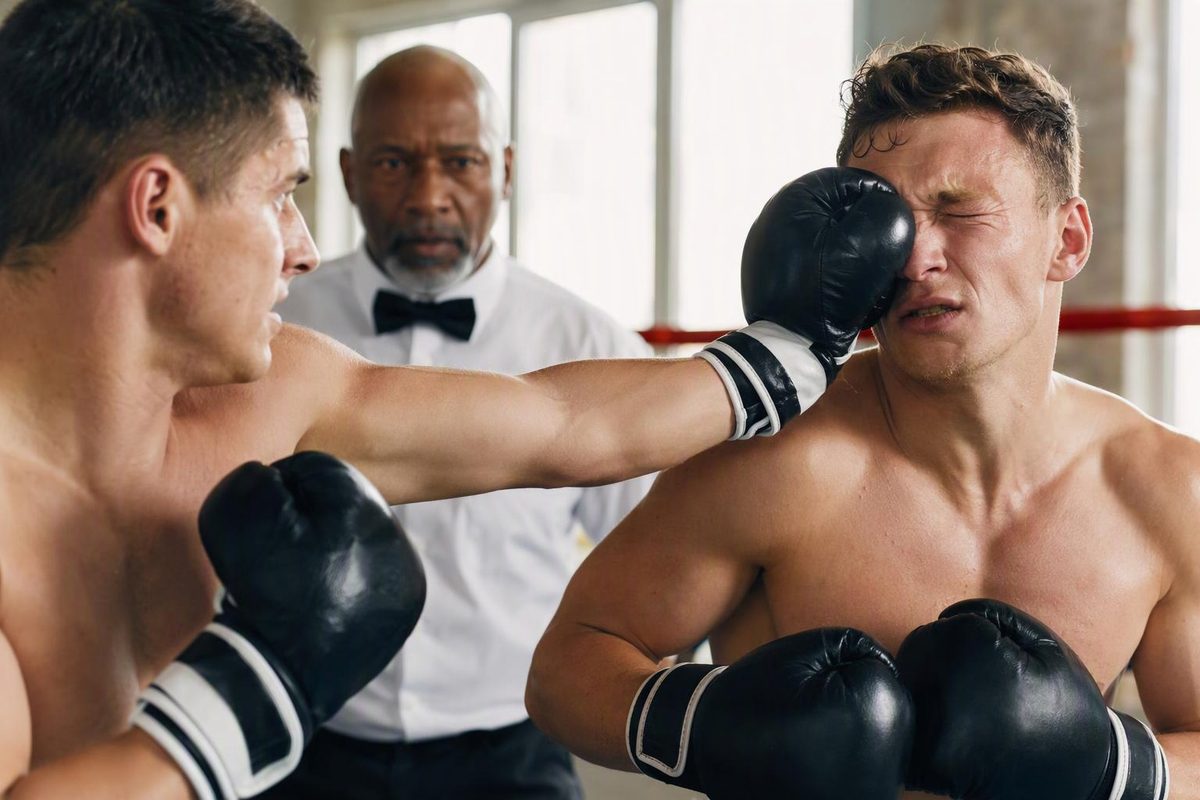
An eye poke is not a boxing technique. If a finger or glove thumb catches your eye during training, stop the drill or sparring round and tell the coach. In a bout, alert the referee immediately. Do not try to finish the round with impaired vision.
What to do after an eye poke
Do not rub, press or touch the injured eye. Avoid putting medication, ointment or leftover prescription drops into it. The American Academy of Ophthalmology’s eye-injury guidance advises prompt medical examination because an injury can be more serious than it initially looks.
Seek emergency medical care immediately if you have:
- Any change in sight, including blurred or reduced vision.
- Severe eye pain, headache or sensitivity to light.
- Nausea or vomiting after the injury.
- Difficulty moving the eye or keeping it open.
- Blood or pus coming from the eye, or a suspected puncture.
These are emergency warning signs in the NHS eye-injury guidance. Do not drive yourself to emergency care; arrange transport or call your local emergency service.
New flashes, floaters, or a curtain-like shadow across your vision also need immediate medical assessment. Ohio State’s ophthalmology guidance explains that blunt eye trauma can cause a retinal tear or detachment. An eye poke can also scratch the cornea—the clear front surface of the eye—causing pain, watering and a gritty feeling. You cannot reliably identify the injury from those symptoms alone. Ohio State explains these possible injuries and when to seek care.
If you suspect a cut or puncture, do not rinse the eye or remove anything stuck in it. Protect it with a rigid shield that does not press against the eye—not a pressure patch—and get emergency help. AAO suggests the bottom of a paper cup taped to the bones around the eye as a temporary shield. Advice to rinse out loose grit does not apply to a suspected cut or puncture. AAO distinguishes these first-aid situations.
Even without emergency signs, arrange prompt assessment after a direct eye injury, especially if discomfort persists. Do not use a brief improvement as permission to restart contact training. If an injury is diagnosed, follow the treating clinician’s return-to-sport advice.
Is an eye poke a foul in boxing?
Yes—deliberately poking an opponent’s eye is not a legal punch. For an explicit example, Virginia’s boxing regulations list “jabbing the opponent’s eyes with the thumb of the glove” as a foul.
The British Boxing Board of Control’s rules prohibit hitting with the open glove, inside of the glove, or wrist, and allow cautions, point deductions or disqualification for rule breaches. They also require attached-thumb gloves. These provisions are current as of October 2026.
The referee applies the rules governing that particular contest. Do not assume every eye injury brings the same penalty or a fixed recovery period. In gym sparring, the priority is stopping contact and assessing the injury—not deciding who won the exchange.
Reduce the risk during practice
Before partner work, have your coach check that your boxing gloves fit properly, are suitable for sparring and have an intact thumb attachment. Do not cut or alter that attachment. Equipment does not make careless contact safe.
A useful beginner fault to correct is reaching towards a partner’s face with an open hand. Practise your jab and guard recovery without a partner first:
- Setup: Stand in your normal boxing stance in clear space, facing a mirror if available.
- Action: Throw ten slow shadowboxing jabs with a properly formed fist and straight wrist. Return the hand to guard after each repetition; do not leave it reaching forward.
- Checkpoint: Pause after every jab. Check your balance, wrist position and guard before repeating.
Use the beginner punching guide to review fist formation. For defensive hand movements, learn compact parrying with a coach rather than improvising a face-level reach. This is a solo technique drill, not an eye-poke drill; any later partner practice should be supervised and controlled.