
How to Shadowbox: Build Stance, Punches and Defense
Learn how to shadowbox with balanced footwork, controlled punches and defense, plus a three-round beginner plan and fixes for common faults.
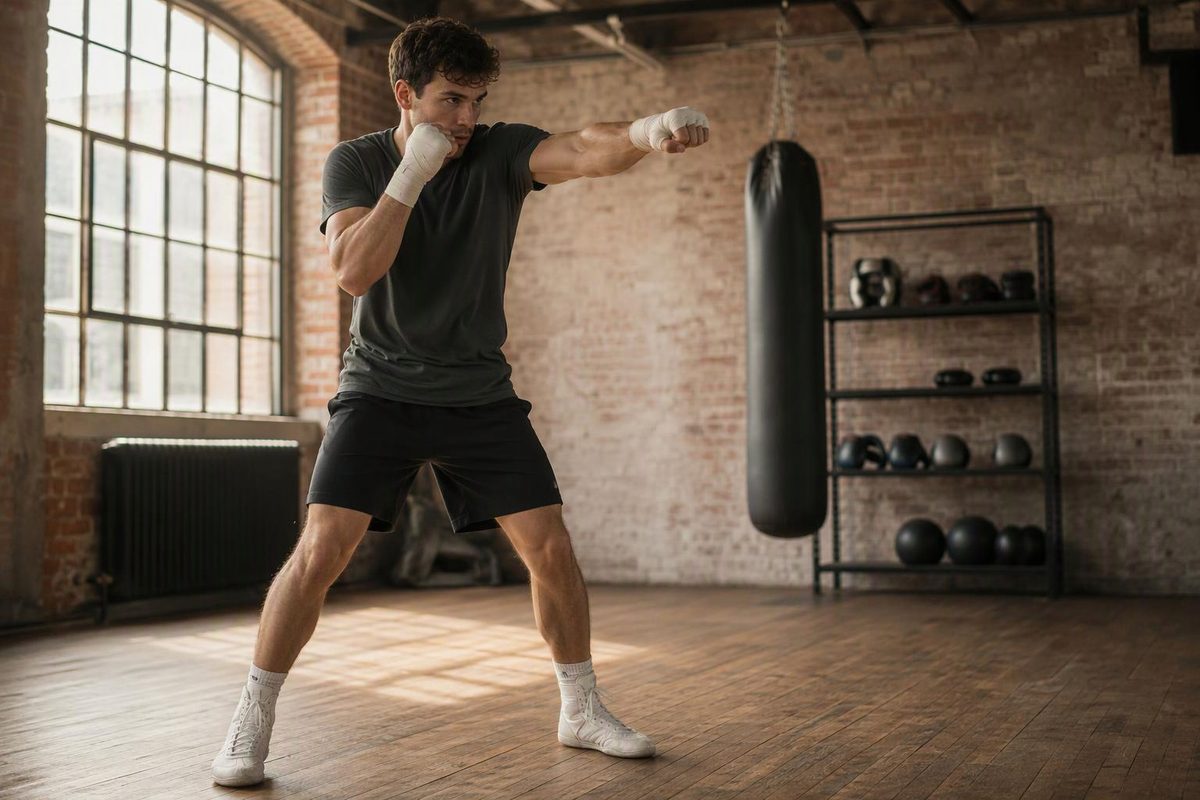
To shadowbox, take your boxing stance and practise moving, punching and defending against an imagined opponent—without hitting anything. Start slowly enough to finish each action balanced, with your hands back in guard. Then link the actions together.
The goal is not to throw as many punches as possible. Give each round a task: maintain your stance, recover your guard or move after punching. Coach Fran Sands recommends visualising an opponent, choosing targets and giving rounds a theme rather than simply going through the motions. MyBoxingCoach’s shadowboxing guide
Set up your space
Choose a clear, dry, non-slip surface. Check that you can extend your arms and take short steps in every direction without touching furniture, walls or another person. England Boxing specifies adequate non-slip floor space for its home shadowboxing drills. England Boxing’s home drills
You do not need a bag or partner for this session. Leave handheld weights out: your first task is controlling your own movement. A timer is useful; a mirror or securely positioned phone is optional.
Before the rounds, spend a few minutes walking or marching, gently moving your shoulders and rehearsing short boxing steps. Begin the punches at an easy pace. Stop if you feel pain or dizziness.
1. Find a stance you can move from
Use the stance your coach has taught you. If you are starting from scratch:
- Stand with your feet roughly shoulder-width apart, one foot forward and the other back—not on a single tightrope line.
- In orthodox stance, the left foot and left hand lead. In southpaw stance, the right foot and right hand lead.
- Soften your knees, keep your weight centred and let the rear heel sit lightly raised.
- Keep your chin slightly tucked, eyes forward, hands near your cheeks and elbows comfortably close to your ribs.
Boxing Canada’s coaching manual emphasises a centred, balanced stance, slightly flexed knees and tucked elbows. Boxing Canada Club Coach manual, pp. 26–29
Checkpoint: Take one short step forward and back. You should finish ready to move again, without having to untangle or reposition your feet.
2. Move before you add punches
Start with small step-and-follow movements:
- Forward: lead foot moves first; rear foot follows.
- Backward: rear foot moves first; lead foot follows.
- Left: left foot moves first; right foot follows.
- Right: right foot moves first; left foot follows.
Keep approximately the same spacing between your feet. Avoid crossing them, clicking them together or taking a long stride that leaves you stretched out. These short advancing, retreating and lateral steps follow the fundamentals described in the Boxing Canada coaching manual.
Practise one step in each direction, pausing briefly after each. For a fuller breakdown, use our beginner boxing footwork guide.
3. Add the jab, then the cross
Imagine a target at an opponent’s head height, within comfortable punching range. Keep your eyes on that imagined opponent rather than watching your fists.
Jab: the lead-hand straight punch
Send your lead fist directly towards the target while the rear hand stays near your cheek. Turn the fist palm-down towards the end of the punch and let the lead shoulder rise slightly to protect your chin. Bring the jab straight back to guard along the same path. Start from a stationary stance; add a small forward step only once the punch and recovery are controlled. Precision Striking’s punch guide
Cross: the rear-hand straight punch
Turn your rear hip and shoulder towards the target, allowing the rear foot to pivot on its ball. Send the rear fist straight out, turning it palm-down, while the lead hand protects your face. Return the punching hand and body to your starting guard. Stay balanced rather than leaning forward. Precision Striking’s cross instruction
For both punches:
- Keep your wrist straight and your thumb outside your curled fingers.
- Exhale briefly as you punch; keep breathing between actions.
- Control the end of the punch rather than forcing the elbow into a hard lock.
- Do not lean forward to reach a target that is too far away.
Think target, then guard—not a fist travelling endlessly through empty space. Sands specifically recommends stopping punches at an imagined target rather than letting them sail beyond it. MyBoxingCoach
If either punch feels unfamiliar, review how to throw a boxing punch before linking them into a jab–cross.
4. Give the opponent a turn
After a jab or jab–cross, imagine a straight punch coming back. Recover your guard, take a short step backward and reset at a new distance. That is enough defensive work for your first session.
Once a coach has taught you slips, blocks or parries, add one at a time. Do not substitute large, improvised head swings for a movement you have not learned. England Boxing’s themed rounds include sequences such as jab–block–jab and rounds requiring defense before punching. England Boxing shadowboxing drills
Solo rehearsal cannot check your timing against a real punch. Partner drills and sparring need qualified supervision; do not turn this session into unsupervised contact.
A three-round beginner practice
Try three 90-second rounds, resting 60 seconds between rounds. These are suggested learning intervals, not competition requirements. Use 60-second rounds if your technique starts to break down.
| Round | Task | Checkpoint |
|---|---|---|
| 1 | Stance and short steps only | Feet stay separated; guard remains in place |
| 2 | Single jabs, then occasional jab–crosses | Both hands are back in guard between sequences |
| 3 | Jab or jab–cross, guard recovery, short retreat | You finish balanced and ready to move again |
Pause between sequences at first. As the movements become familiar, shorten the pauses without rushing the punches.
Fix one fault at a time
- Hands drop after punching: Throw one slow jab and pause in guard. Repeat five times, checking the non-punching hand as well.
- Feet cross or come together: Remove the punches. Take five short steps in each direction, restoring your stance after every step.
- You reach and stumble: Move the imagined target closer. Throw single punches and check that you can stop balanced.
- Everything becomes hurried: Shorten the round and return to single jabs. Add combinations only when guard recovery stays consistent.
Record a short clip from the front and side, with your whole body visible. Review just one checkpoint—or ask a coach to identify the priority correction. Progress by adding one familiar defense or lengthening one round, not by increasing speed, complexity and duration together.