
Orthodox Boxing: Build a Balanced Stance Before Adding Punches
Learn the orthodox boxing stance, left jab and right cross, with footwork cues, common-fault fixes and a short solo practice progression.
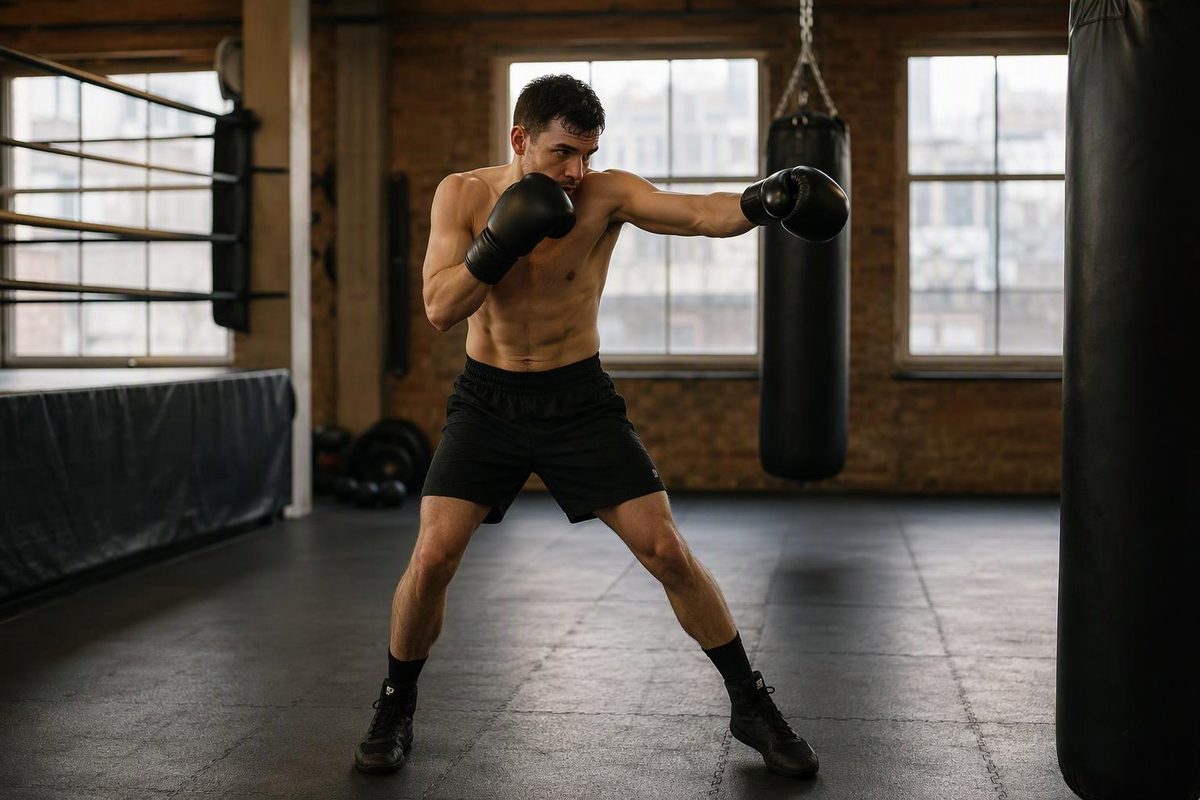
Orthodox boxing means boxing with your left foot and left hand forward, and your right foot and right hand behind. Your left is the lead side; your right is the rear side. The left hand throws the jab, while the right throws the straight rear-hand punch, usually called the cross. England Boxing teaches this left-hand-leading position as the orthodox stance in its coaching handbook.
Orthodox is a stance, not a complete fighting style. It does not dictate whether you pressure, counterpunch or box at long range. For beginners, the first task is simpler: hold a position you can punch, defend and move from without losing balance.
Set your feet and guard
Face an imaginary opponent in a clear, non-slip practice space.
- Place your left foot forward and your right foot behind and slightly to the right. Keep some side-to-side space between them rather than standing on one tightrope line.
- Start with a comfortable base slightly wider than shoulder width. Leave enough forward–back spacing to feel stable, but not so much that taking a short step becomes difficult.
- Soften your knees and lift your right heel slightly. Stay ready to move without standing high on your toes or locking your legs.
- Turn your torso partly sideways. Your left shoulder is closer to the target; avoid facing it completely square-on.
- Bring your hands near cheek level. Keep the left slightly forward, the right beside your cheek, and your elbows close enough to cover your body.
- Lower your chin gently and keep looking forward. Relax your shoulders rather than squeezing your chin down hard.
These cues follow England Boxing’s stance and guard principles: a stable base, slightly bent knees, an offset rear foot and a relaxed guard.
Checkpoint: take one small step forward and back. If you must first rock your whole body or rearrange your feet, adjust the spacing. The stance is a starting position for movement, not a pose to hold rigidly.
Orthodox is a usual starting point for right-handed beginners, but handedness alone is not a reason to keep changing stance during practice. Ask a coach to assess your balance and coordination. For the reversed position and matchup differences, see southpaw vs orthodox boxing.
Move without losing your base
For basic step-and-slide footwork, move the foot nearest the direction of travel first, then let the other follow. This is the lateral-movement cue in Honour & Glory Boxing Club’s footwork drill; Fran Sands explains the corresponding forward and backward movements.
| Direction | First foot | Following foot |
|---|---|---|
| Forward | Left | Right |
| Backward | Right | Left |
| Left | Left | Right |
| Right | Right | Left |
Keep the steps short and restore roughly the same spacing after each movement. Do not cross your legs or bring your feet together. England Boxing emphasises maintaining the base through short, smooth foot movements.
Common fault: the left foot retreats until it meets the right.
Corrective drill: take one small backward step with the right foot, then move the left back by the same amount. Pause and inspect the gap. Repeat five times slowly before adding a forward return. For a fuller progression, use the beginner footwork guide.
Add the left jab and right cross
Start with slow punches into open space, not maximum-power swings.
- Left jab: send the left fist straight out without drawing it back first. Keep the right hand beside your cheek, then return the left to guard.
- Right cross: turn through your hips and torso while allowing the right foot to pivot on its ball. Extend the right arm toward the target, keep the left hand guarding, then recover your stance.
Keep your wrists straight and breathe out with each punch. England Boxing’s straight-punch instruction stresses body rotation, a balanced base, protection by the non-punching hand and prompt guard recovery.
Common fault: reaching with your head and chest to make the punch longer.
Corrective drill: throw one slow jab, recover and pause. Check that you can step backward without first pulling your torso upright. Shorten the punch if you cannot. In target work, use your feet to establish range rather than leaning to reach.
A short solo practice progression
After a gentle warm-up, try three one-minute rounds with 30 seconds of rest between them:
- Stance and movement: take single steps in all four directions. Check your foot spacing after each.
- Jab and recover: throw one left jab, return to guard, then take a small backward step.
- Jab–cross and recover: throw a slow left–right sequence, restore both hands to guard, then step back.
Use a mirror or a short recording to check one fault at a time. Coach Fran Sands also recommends mirror checks for stance faults.
The checkpoint is control: finish each sequence able to move in either direction, with your hands back in position. Keep this practice non-contact. Partner defense and sparring need a qualified coach, appropriate equipment and controlled supervision; solo practice does not establish readiness to take punches.