
Southpaw vs Orthodox Boxing: Stances and Matchup Basics
Compare southpaw and orthodox boxing stances, choose a beginner starting point, and learn outside-foot positioning with a simple solo drill.
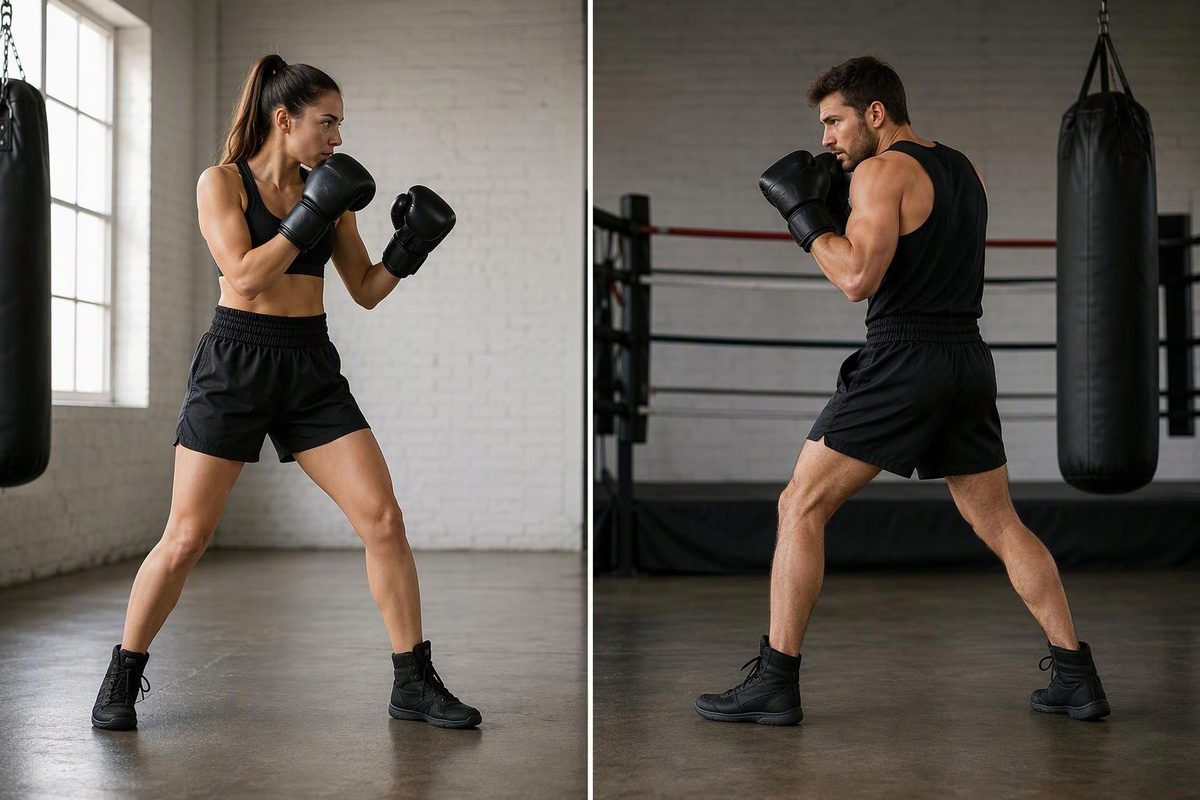
Orthodox boxers lead with the left foot and left hand; southpaw boxers lead with the right. The punches and fundamentals stay the same, but their left–right arrangement changes. When the two stances meet, the angles for jabs, rear-hand punches and footwork change too.
Neither stance is automatically better. For a beginner, the useful questions are which stance to learn first and how to stay balanced against someone using the opposite one.
The basic differences
“Lead” means the side nearer your opponent. “Rear” means the side farther away.
| Feature | Orthodox | Southpaw |
|---|---|---|
| Lead foot and hand | Left | Right |
| Jab | Left hand | Right hand |
| Rear straight, often called the cross | Right hand | Left hand |
| Lead hook | Left hand | Right hand |
| Usual starting point | Right-handed beginners | Left-handed beginners |
England Boxing’s coaching handbook identifies the left hand as the orthodox lead and the right hand as the southpaw lead. It teaches the same foundations for both: balance, width and depth between the feet, a sound guard and movement without crossing the legs.
Handedness is a starting point, not the definition of a stance. A right-handed boxer can box southpaw; the name describes how they stand, not which hand they write with.
Which stance should you choose?
A sensible default is your dominant hand at the rear: orthodox if you are right-handed, southpaw if you are left-handed. Coach Fran Sands gives this as his beginner rule of thumb in his stance guide.
If the opposite stance feels more natural, ask a coach to assess it rather than choosing from one comfortable pose. Check whether you can:
- Step forward, backward and sideways without bringing your feet together.
- Throw a jab and rear straight without leaning beyond your base.
- Return both hands to guard and move again immediately.
Choose a primary stance and build those skills consistently. Stance switching adds another set of movement and defensive decisions; ExpertBoxing’s beginner guidance recommends establishing offense and defense from one stance before learning to switch.
For a detailed right-foot-forward setup, use our southpaw stance guide.
What changes when southpaw faces orthodox?
Two orthodox boxers—or two southpaws—have a same-stance, often called closed-stance, matchup. Southpaw against orthodox is an opposite-stance or open-stance matchup. Their lead hands and lead feet face one another more directly.
The outside lead-foot position
In an opposite-stance matchup, placing your lead foot outside the opponent’s lead foot can improve your angle for the rear straight while moving you away from their rear-hand line.
The directions are from your own viewpoint:
- Orthodox facing southpaw: outside is toward your left.
- Southpaw facing orthodox: outside is toward your right.
Sands explains this mirrored relationship in his southpaw–orthodox tactics lesson. Both boxers are trying to occupy that useful angle.
Treat it as a positional option, not a rule to chase at any cost. An outside foot does not make you unhittable. If reaching for it leaves your feet too wide, your body leaning or your guard open, reset rather than forcing the punch.
Punching and defense still belong together
Your opponent’s rear straight comes from the opposite side compared with a same-stance opponent. Keep watching the opponent rather than looking down at the foot contest, and recover your guard after punching.
Do not abandon the jab just because the lead hands meet. Begin with simple jab–rear-straight work and let your coach teach the timing, hand positioning and defensive response. England Boxing’s handbook warns against giving novices complicated combinations before their positioning and balance are ready.
A solo drill: step, punch, reset
Common fault: taking a large outside step, then dragging the rear foot after the punches. This leaves an overextended base.
Practise the correction without contact. This rehearses balanced movement toward your lead side; it does not test your position against a moving opponent.
- In a clear space, take your usual stance with knees soft and hands up. Imagine an opposite-stance opponent ahead.
- Take a small step toward your lead side—left for orthodox, right for southpaw.
- Follow with the rear foot in the same direction, restoring your normal stance width and depth. Do not cross your feet or bring them together.
- Throw a slow jab–rear straight into the air, then return both hands to guard.
- Pause, check your balance and reset. Repeat five times before adding continuous movement.
Checkpoint: after the combination, you should be able to step backward immediately without first rearranging your feet. If you cannot, shorten the step and slow down. Our boxing footwork guide covers the underlying movement pattern.
Keep this drill solo. Learning to apply it against punches belongs in coach-led partner work with appropriate equipment and controlled intensity—not unsupervised sparring.