
Learn the Four Boxing Punches and Their Six Numbers
Match boxing punch numbers to your lead or rear hand, learn the paths of jabs, crosses, hooks and uppercuts, and practise slow drills that expose faults.
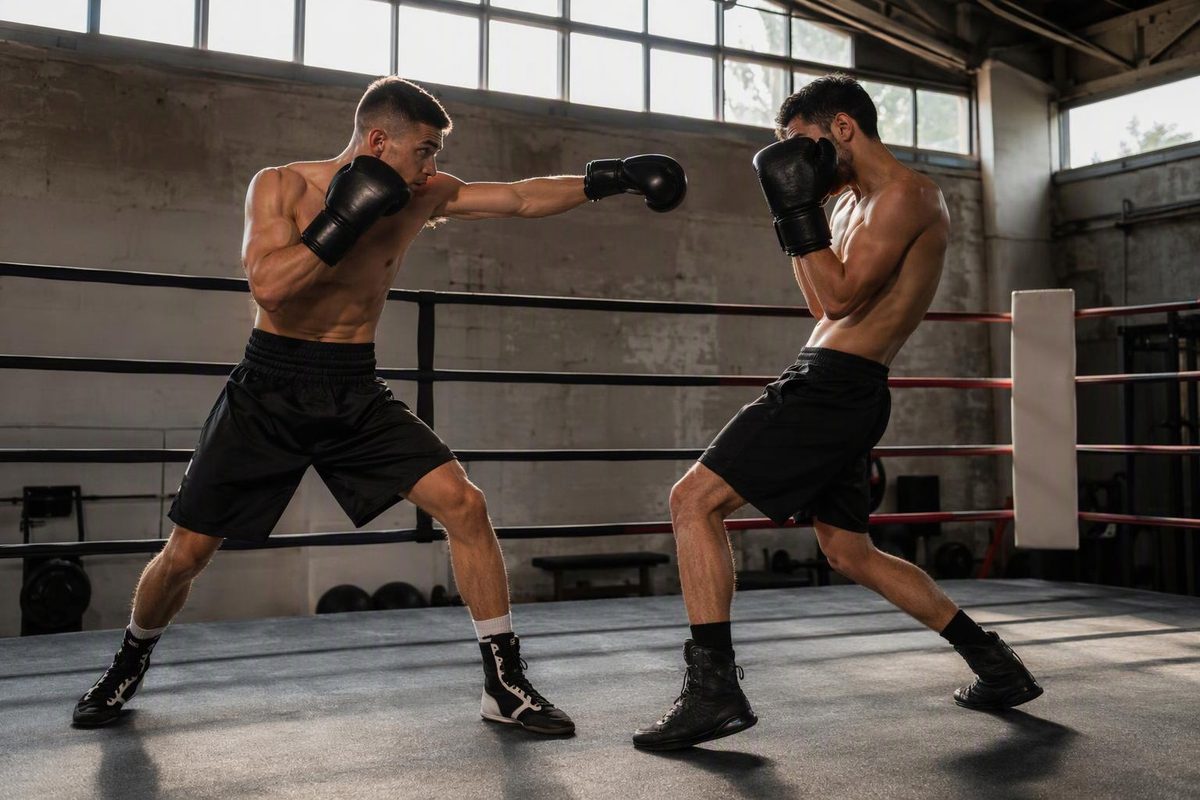
The four basic types of punches in boxing are the jab, cross, hook and uppercut. Coaches may also describe six basic punches: that count separates hooks and uppercuts into lead-hand and rear-hand versions. FightCamp uses this six-punch numbering system.
The distinction is the punch’s path: jabs and crosses travel straight, hooks travel around, and uppercuts travel upward. The AIBA coaches manual groups the basics into straight punches, hooks and uppercuts—another way of organizing the same foundations.
Choose your stance and a punch number to see which hand throws it and what to check.
Match a Number to Your Hand
1 — Jab: Left Hand
- Hand Role
- Lead hand
- Punch Path
- Straight toward the target, then straight back to guard.
- Technique Check
- Keep your chin down and your rear hand beside it.
Sources: FightCamp’s six-punch numbering, AIBA coaches manual and England Boxing coaching handbook, linked in the article. Confirm your coach’s numbering.
Six Common Punch Numbers, Matched to Your Stance
Your lead hand is on the same side as your forward foot; your rear hand is on the back-foot side. In an orthodox stance, the left hand leads. In a southpaw stance, the right hand leads.
| Number | Punch | Path |
|---|---|---|
| 1 | Jab | Straight with the lead hand |
| 2 | Cross, or rear straight | Straight with the rear hand |
| 3 | Lead hook | Around with a bent lead arm |
| 4 | Rear hook | Around with a bent rear arm |
| 5 | Lead uppercut | Upward with the lead hand |
| 6 | Rear uppercut | Upward with the rear hand |
This is common shorthand, not a universal language: confirm your coach’s numbering before following combinations. Under this lead/rear convention, a southpaw’s 1 is a right jab, not a left jab.
Start Every Punch From a Balanced Stance
Keep your knees soft, chin down and hands in guard. Use your legs and body to drive the punch rather than swinging only your arm. Exhale as you punch, keep the wrist straight, and recover your guard promptly. These punching principles are covered in the England Boxing coaching handbook.
If punching makes you stumble or brings your feet together, return to basic stance and footwork practice before adding speed. Use the slow solo drills below to check one fault at a time.
Jab: The Lead Straight (1)
The jab helps judge distance, interrupt an opponent and set up another punch. From guard, send the lead fist straight toward an imaginary target. Keep your rear hand beside your chin, then bring the jab straight back to guard.
Checkpoint: Your chin stays down and the rear hand does not drift away.
Common fault: Pulling the lead hand backward before punching, which signals the shot.
Corrective drill: In a mirror, throw five slow jabs from guard. Pause between repetitions and check that the first movement goes toward the target—not backward. For a fuller progression, use the jab guide.
Cross: The Rear Straight (2)
The cross travels straight from the rear hand. Turn on the ball of your rear foot as your hip and shoulder rotate and you extend the arm. Keep your lead hand guarding your face and recover the rear hand without falling forward.
Checkpoint: The rear foot turns with the body; you finish balanced enough to move again.
Common fault: Leaving the rear foot planted while trying to generate the whole punch with the arm.
Corrective drill: Slowly rehearse the rear-foot and hip turn without punching. Then add five relaxed crosses, resetting your stance each time.
Hook: The Bent-Arm Punch Around the Side (3 and 4)
A hook travels in an arc and is commonly used at mid-range. Either hand can throw it. For a basic head-height hook, keep the elbow bent roughly at a right angle and turn your body to carry the fist around. Keep the opposite hand in guard. The range and bent-elbow position are described in the AIBA manual’s hook section.
Checkpoint: The arm stays bent rather than straightening into a wide swing.
Common fault: Drawing the hand back to wind up.
Corrective drill: Shadowbox five small hooks per side directly from guard. Start slowly enough to notice any backward preparation. Stop and reset if the turn pulls you off balance.
Uppercut: The Bent-Arm Punch Upward (5 and 6)
Uppercuts are generally used at short to medium range. Soften the knees and use a small leg-and-hip drive to send the bent arm upward. Keep the motion compact and the other hand guarding; do not scoop from your waist.
Checkpoint: Your chin stays down rather than tipping upward with the punch.
Common fault: A large wind-up that drops the punching hand and exposes the head.
Corrective drill: Throw five slow uppercuts per side in shadowboxing, using only a small knee bend. Watch that your hand does not drop to your hip before rising.
England Boxing’s uppercut coaching points emphasize leg-and-hip drive, a short upward punch and avoiding a wind-up or raised chin.
Body Shots Change the Target, Not the Punch Family
Body punches are target variations, not an entirely separate set of punches. For straight body shots, lower your level with your knees instead of folding forward at the waist. Keep your eyes on the target, chin down and recover into guard, as described in England Boxing’s straight-punch guidance.
Learn Single Punches Before Movement and Combinations
Start with slow, single punches in shadowboxing. Once you can punch and reset without losing balance, add a small step, then try beginner combinations. The AIBA manual’s teaching sequence progresses from individual punches in stance to punches with movement, then combinations.
Keep these drills non-contact. Before hitting bags or pads, use properly applied wraps and suitable padded gloves; England Boxing stresses both in its hand-protection guidance. Have a qualified coach check your technique before adding force, and leave partner contact to supervised sessions.