
Southpaw Boxing: Build Your Right-Lead Fundamentals
Learn southpaw boxing with right-lead stance and footwork cues, a right jab–left cross sequence, common-fault fixes and three short solo drills.
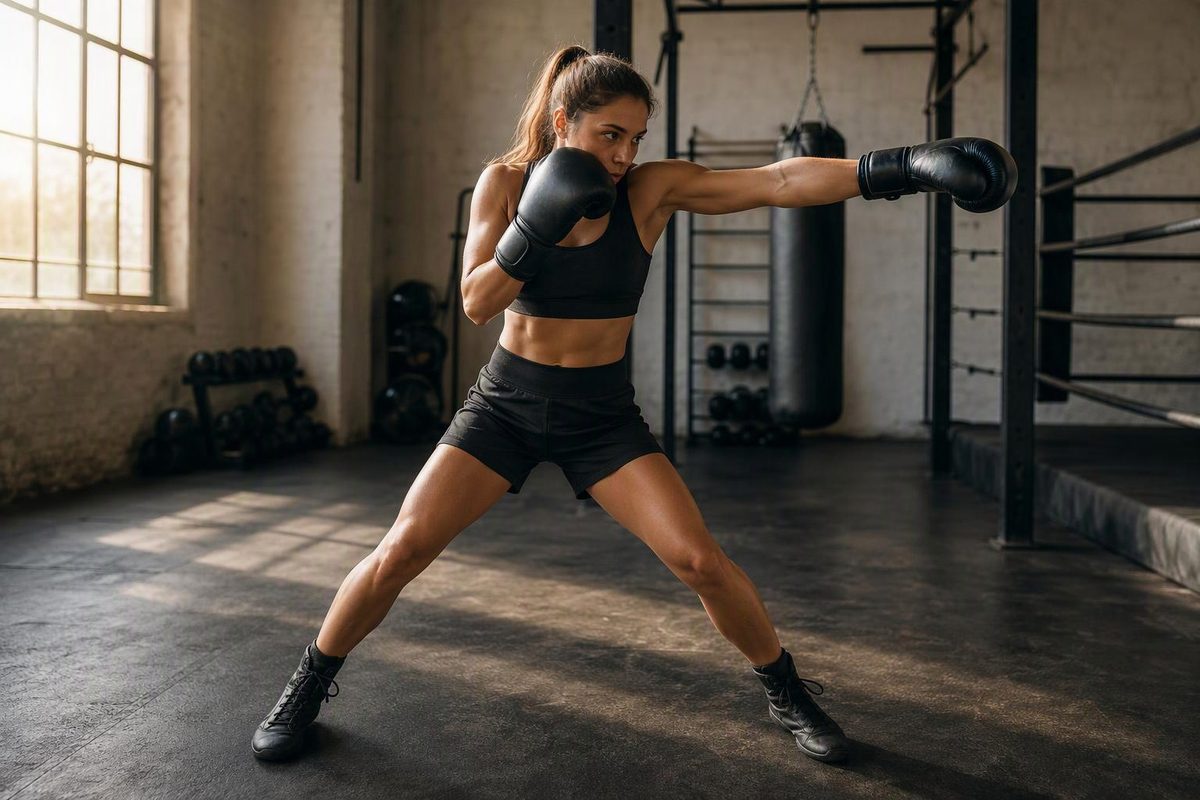
Southpaw boxing means boxing with your right hand and right foot forward. Your right hand throws the jab; your left hand throws the rear straight, often called the cross. Southpaw is the usual starting point for left-handed beginners, as My Boxing Coach’s stance guide explains. The name describes your stance, not necessarily your dominant hand.
Build it in order: a balanced stance, short steps, straight punches, then defense. If you are unsure which stance to use, have a coach assess how you move, punch and recover your guard. For stance selection and opposite-stance positioning, see southpaw vs orthodox boxing; the practice below focuses on your own right-lead fundamentals.
Set your stance and guard
Face an imaginary target, then place your right foot forward and your left foot back. Keep some sideways space between them rather than standing on a tightrope.
- Start with your feet about shoulder-width apart and adjust to a comfortable, balanced base.
- Turn your body partly sideways, with your right shoulder nearer the target.
- Keep your knees soft and your rear heel slightly raised.
- Hold your right hand around eye or cheek level and your left fist beside your chin.
- Keep your elbows close to your body, wrists straight and chin gently lowered. Look ahead, not at the floor.
These cues follow the stance principles in the AIBA Coaches Manual, pages 34–35, which also flags overly wide or narrow feet as common faults.
Checkpoint: You should be able to take a small step in any direction without first rocking your weight or rearranging your feet.
Move without losing the shape
For basic step-and-slide footwork, move the foot nearest your direction of travel first:
| Direction | First foot | Following foot |
|---|---|---|
| Forward | Right | Left |
| Backward | Left | Right |
| To your right | Right | Left |
| To your left | Left | Right |
Keep the steps short. Let the second foot restore your stance width rather than bringing your feet together. This direction-first method is described for southpaws in the AIBA Coaches Manual’s boxing steps section, pages 36–39.
Common fault: Your feet meet or cross during a change of direction.
Fix: Practise one step at a time and freeze after each. Check that your right foot is still forward and there is space between your feet. Our beginner footwork guide gives a fuller progression.
Add the right jab and left cross
Start with single punches from a stationary stance.
Right jab: Send your right fist straight towards the imaginary target, allowing a small body turn. Keep your left hand guarding your chin. Bring the right hand straight back to its starting position.
Left cross: Push through your rear foot to initiate the hip and shoulder rotation as your left fist travels straight towards the target. Keep your right hand up, then bring your left hand back along the same path and recover your stance. This mirrors the rear-hand mechanics in My Boxing Coach’s right-cross guide, which demonstrates the punch for an orthodox boxer and warns against merely spinning the rear foot.
Practise slowly and stop short of snapping your elbow into a locked position. The AIBA Coaches Manual, pages 40–43, recommends learning punches from a stationary stance before adding steps, and singles before combinations.
Common fault: You reach with your head and chest to make the left cross longer.
Fix: Shorten the punch and pause after recovery. Can you step backwards immediately without first pulling yourself upright? Once both singles are controlled, join them into a right jab–left cross.
Keep defense in the practice
Against an orthodox boxer, your right lead hand faces their left lead hand. A compact lead-hand block is one defensive option, but reaching out to intercept punches creates openings. My Boxing Coach’s lead-hand block guide specifically warns against this reaching fault.
For solo practice, focus on returning both hands to guard after every punch. Learn actual blocks and counters with a coach; shadow boxing cannot check whether your defense stops an incoming punch.
Three short solo rounds
Use clear floor space and an imaginary target. Try 60 seconds per round, resting 30 seconds between rounds. These are short technique rounds, not a speed or endurance test.
- Stance and steps: Move in four directions, freezing after each step to check your base.
- Right jab: Throw one slow jab, return to guard, then reset. Check that your left hand stays up.
- Jab–cross: Throw the right jab–left cross, recover both hands, then take one short backward step.
If you lose balance or repeatedly drop a hand, return to the previous drill rather than adding speed. Keep these rounds non-contact; partner defense, pads and sparring need appropriate coaching and equipment.