
Four Beginner Boxing Combos to Practise With Balance and Guard
Learn four beginner boxing combos, punch numbers, technique checkpoints and a short solo drill that links punches, guard recovery and footwork.
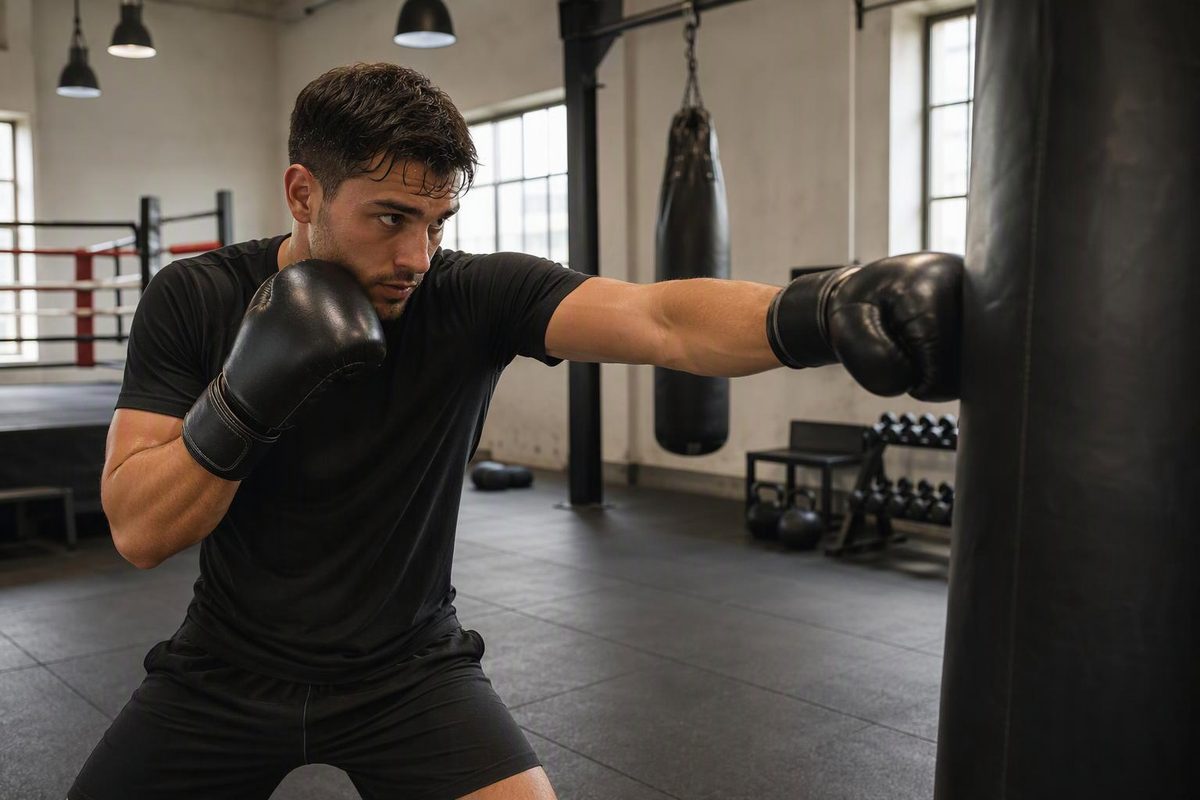
Start with jab–cross (1–2), then add a second jab, a lead hook or a change between body and head height. The aim is to connect punches without losing your stance—not to memorise the longest sequence.
England Boxing recommends keeping beginner combinations to two or three punches, at an appropriate range, while maintaining balance and a smooth transition between shots. Learn each punch individually before linking it to another. England Boxing coaching handbook, Part 1
Punch numbers and setup
For the combinations below, use this shorthand:
| Number | Punch |
|---|---|
| 1 | Jab: straight punch with the lead hand |
| 2 | Cross: straight punch with the rear hand |
| 3 | Lead hook: bent-arm punch travelling around the side |
Your lead side is the side nearest the target. In an orthodox stance, the left hand leads; in southpaw, the right leads. The sequences stay the same—reverse the hands, not the numbers. Confirm your coach’s numbering system when following gym instructions.
Begin with feet staggered, knees soft, chin lowered and hands in guard. Use a clear space for shadow boxing: solo practice without hitting a target. If your stance shifts before you have even punched, review the beginner footwork guide first.
For every sequence:
- Keep the non-punching hand protecting your face.
- Recover each punching hand towards guard as the next shot develops.
- Turn through your hips rather than reaching with your upper body.
- Keep your wrists straight and breathe out with each punch.
- Finish able to move without a stumble or an extra balancing step.
England Boxing’s punching guidance stresses body rotation, guard recovery and avoiding over-rotation or throwing the body forward. Punch mechanics and common errors
Four boxing combos to learn in order
1. Jab–cross: 1–2
Throw the jab straight from guard. As it returns, rotate through the rear hip and foot to deliver the cross. Bring the rear hand back to guard rather than leaving it extended.
Practise this without stepping first. Once it is controlled, work on entering range with your coach rather than stretching to reach a target.
Checkpoint: After the cross, pause in guard. You should not be leaning forward to reach, and you should be able to take a short step back immediately.
If the first punch is inconsistent, revisit the jab, built from stance up.
2. Jab–jab–cross: 1–1–2
Throw a jab, recover it, then throw another jab followed by the cross. Begin with two distinct, controlled jabs; do not leave the lead arm hanging out between them.
Once the sequence is reliable, try a slight rhythm change: a measured first jab followed by a quicker jab–cross. Varying the jab rhythm is one way to develop this combination without adding more punches. Johnny Nguyen’s jab–jab–cross instruction
Checkpoint: The second jab should not pull your feet together or make your shoulders climb towards your ears. If it does, slow down and practise the double jab alone.
3. Jab–cross–lead hook: 1–2–3
Have a coach check your lead hook before adding it to this sequence; England Boxing identifies it as a technical challenge for beginners. Link your jab and cross, then turn back through your hips into a compact lead hook. Do not draw the lead hand backwards to wind up. Keep the rear hand protecting your face during the hook. Lead-hook mechanics
Check range carefully: if the target is too far away for a controlled hook, do not straighten the arm and chase it. Practise the transition in shadow boxing before using coach-held pads.
Checkpoint: After the hook, your eyes remain on the target and your feet still support a balanced stance. England Boxing includes this sequence followed by a return to guard in its combination-punching examples. Level 2 coaching handbook
4. Body jab–head cross–head jab: 1 body–2 head–1 head
Lower your level by bending your knees, keeping your back straight and bringing your lead shoulder level with the target. Jab towards an imaginary body target, then return to upright punching height for the cross and final jab.
Do not fold at the waist or drop both hands to reach the body. This sequence adds a change of target height while retaining straight punches; it is also an England Boxing teaching example. Body-jab technique and combination examples
Checkpoint: You can lower and rise without looking at the floor, narrowing your stance or needing a recovery hop.
A short solo practice plan
After warming up, choose one combination, not all four. Try three one-minute shadow-boxing rounds, resting enough between rounds to recover:
- Sequence: Repeat slowly, resetting your stance between combinations.
- Flow: Link the punches smoothly without a long pause between shots. Keep speed low enough to check your guard recovery.
- Finish and move: Return to guard, then take a short step back—rear foot first, lead foot following—without crossing your feet. Reset before repeating.
This step-back is a solo movement drill, not a defence that fits every exchange. A coach should teach you how to select exits, blocks or head movement in response to an opponent.
Common fault: overcommitting to the cross. If it leaves you leaning or unable to throw the next punch, use a freeze-and-step drill: throw a light 1–2, freeze in guard, then step back. Reduce the effort until the step requires no preliminary shuffle. England Boxing identifies overcommitting mid-combination and finishing off balance as common errors. Combination-punching guidance
Move to light bag work only after basic punching instruction, using properly fitted wraps and suitable bag gloves. Stop if you feel pain or lose control of your technique. Partner contact and sparring belong in supervised coaching—not in an improvised test of whether you can remember a combo.